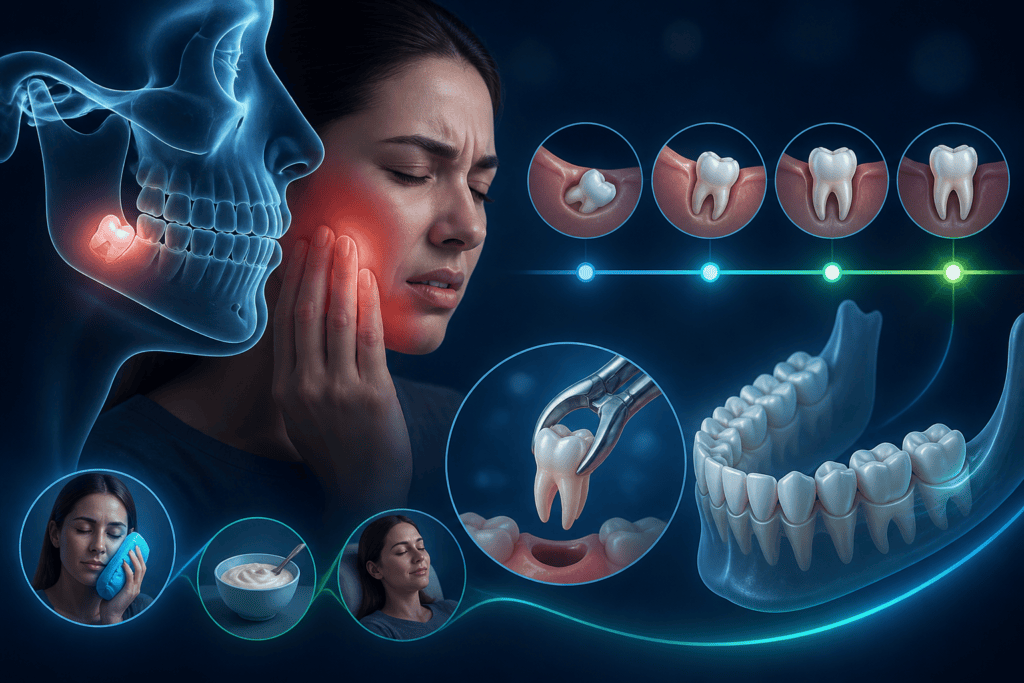
Wisdom tooth pain can be quite the puzzling experience. These molars, which arrive later in life, often make themselves known by causing discomfort. Understanding when they usually show up and when they might need to be removed can help both doctors and patients. This knowledge helps in planning and managing any necessary treatments. So, let’s take a closer look at what wisdom tooth pain involves, when it usually happens, and how to best handle these dental issues.
The Anatomy and Purpose of Wisdom Teeth
Wisdom teeth are also known as third molars. They’re the last of the molars to appear, usually between the ages of 17 and 25. Long ago, these teeth were helpful for our ancestors. They ate a lot of tough foods that required extra chewing power. Nowadays, our diets have changed, and the need for wisdom teeth isn’t what it used to be. Because of this, many people find their mouths too small to fit these extra teeth. This can lead to problems like the teeth getting stuck or misaligned.
Related reading: key steps for Breast and Nipple Proportions: Normal Anatomy and Variations.
When Wisdom Teeth Erupt
Wisdom teeth don’t follow a strict schedule when they start to appear. This can vary a lot from person to person. Most often, they start to come in during late teenage years. For some people, though, these teeth might try to come in later in life. This can cause pain as they push against other teeth or get stuck in the jaw.
How Long Does Eruption Last?
The pain from wisdom teeth coming in can last from several weeks to months. Common symptoms include swollen gums, pain in the jaw, and difficulty chewing. It can be a tough time as the gums stretch to make room for the new tooth. For some, the discomfort goes away once the tooth is fully in. Others might need a treatment to stop the pain.
Related reading: How Long Does Sciatic Nerve Pain Last? Acute vs. Chronic Sciatica guide.
Related reading: key steps for Swollen Gum Behind Your Back Tooth.
You may also find our guide to Wisdom Tooth Pressing on a Nerve: Symptoms, Risks, and Extraction guide helpful.
To better understand the timeline of wisdom teeth and their impact on pain, check out the How Long Does a Wisdom Tooth Take to Come In? Eruption Stages guide.
As you navigate wisdom tooth pain, it's also important to consider the key steps for Two-Year Molars: Signs of Eruption, Timeline, and Pain Relief.
When Removing Wisdom Teeth is Necessary
Not everyone has serious issues with their wisdom teeth, but some do. If wisdom teeth don’t come in properly because they’re blocked by other teeth or bones, they can cause ongoing pain and other problems. In those cases, taking them out might be the best option to stop the pain and prevent more dental issues.
The Process and Timing for Extraction
Deciding to remove wisdom teeth usually starts with a detailed dental exam, often including X-rays to check how the teeth are positioned. If removal is needed, it’s usually done quickly to stop problems like infections or cysts from forming.
After the teeth are out, recovery usually takes about one to two weeks. It’s normal to have some pain and swelling at first, but things typically start getting better after a few days. Following the dentist’s advice on aftercare is important. Things like keeping your mouth clean and not doing heavy activities can make recovery smoother.
Pain Relief: Tips and Techniques
Managing the pain from wisdom teeth is crucial for feeling better and recovering well. You can use both medicines and simpler home techniques to ease the discomfort.
For those dealing with discomfort, a helpful resource is the How to Speed Up Wisdom Teeth Recovery: Evidence-Based Healing Tips overview, which offers strategies for a smoother healing process.
Medicines to Help
- Pain Relievers: Over-the-counter drugs like ibuprofen can help reduce pain and swelling.
- Stronger Medicines: If the pain is really bad, a dentist might prescribe stronger painkillers or antibiotics if there’s an infection.
Other Pain Relief Methods
- Ice Packs: Putting a cold compress on the sore area can help reduce swelling and numb the pain.
- Warm Saltwater Rinses: Rinsing your mouth with warm salt water can clean the area and ease minor irritation.
- Soft Foods: Eating soft or liquid foods can help avoid irritating the sore area.
The Importance of Educating Patients
Telling patients what they might face with wisdom teeth is an important part of dental care. Clear communication on what to expect during and after the teeth come in or are taken out can help patients take care of themselves. Giving them detailed care instructions and answering their questions can boost their satisfaction and health outcomes.
For a closer look, explore our resource on key steps for What to Eat After a Tooth Extraction: Best Soft Foods for Recovery.
Comparing Pain Management Approaches
| Strategy | Pros | Cons |
|---|---|---|
| NSAIDs | Reduces pain and swelling well | May cause stomach issues if used long-term |
| Cold Compresses | Easy to use and non-invasive | Only offers short-term relief |
| Saltwater Rinses | Helps maintain oral health | Not as effective for severe pain |
| Prescription Analgesics | Stronger pain relief | Could cause side effects and dependency |
Conclusion: Handling Wisdom Tooth Pain with Assurance
Dealing with wisdom tooth pain, whether it’s from the teeth coming in or after removal, can be tricky. By knowing what to expect and using good pain management techniques, healthcare providers can help make the process easier. Educating patients and encouraging proactive care are key to reducing pain and ensuring good outcomes.
For a closer look, see our guide to What to Do for Tooth Pain: Effective Relief and When to See a Dentist overview.
Frequently Asked Questions
- How long does wisdom tooth pain last after extraction? Pain usually lasts a few days after removal, with major improvement in one to two weeks.
- Can wisdom teeth erupt without causing pain? Yes, some people might not have much pain when their wisdom teeth come in.
- What are the signs that wisdom teeth need to be extracted? Ongoing pain, swelling, infection, and crowding of other teeth are signs that removal might be needed.
- How can I speed up recovery after wisdom tooth extraction? Following your dentist’s aftercare advice, keeping good oral hygiene, and resting can help you heal faster.
Disclaimer: This content is published strictly for educational and general informational purposes. It does not constitute professional medical, legal, financial, or technical advice. Always consult a certified specialist or licensed professional regarding your specific situation before making decisions.