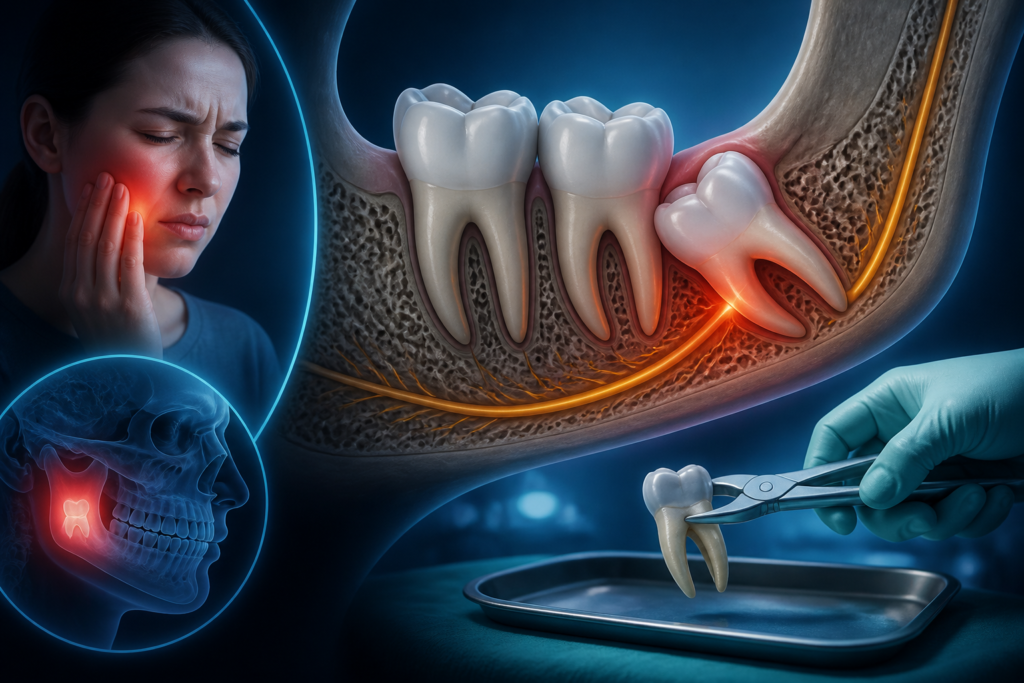
Ah, wisdom teeth, those pesky third molars that love to make their grand entrance during late teens or early 20s. While they’re capable of adding to a mouth’s functionality, they often stir up trouble because they show up fashionably late. One biggie? A wisdom tooth might decide to cozy up a bit too close to a nerve, sparking discomfort and a handful of other issues. So, getting the scoop on what symptoms to look out for, the risks involved, and how to handle this situation is key for both healthcare folks and patients alike.
For a closer look, see our guide to Wisdom Tooth Infection Symptoms: Warning Signs and Treatment guide.
The Core Issue
When wisdom teeth start pushing on nerves, the main worry is nerve damage or getting those nerves all irritated. The usual suspects here are the inferior alveolar nerve (IAN) and the lingual nerve. These guys play an essential role in giving sensation to parts of our lower jaw, teeth, chin, and even the tongue. A wisdom tooth crowding their space can spell out numbness, a bit of tingling, or outright pain. The sooner you can spot these signs and grasp the risks, the better you can tackle the issue.
If you want more detail, review our article on key steps for How Long Does Wisdom Tooth Pain.
What Research and Regulations Actually Say
Turns out, the drama of wisdom teeth messing with nerves isn’t the same for everyone. According to the research, the distance between wisdom teeth and nerves varies from person to person, which means the nerve involvement risk isn’t one-size-fits-all. The American Association of Oral and Maxillofacial Surgeons (AAOMS) shares that about 10% to 12% of wisdom tooth extractions might flirt with temporary nerve injury. On the flip side, permanent nerve damage is a rarity, happening in less than 1% of cases.
Related reading: key steps for Can a General Dentist Remove Teeth? Extractions vs. Oral Surgery.
And what do the big league guidelines say? The American Dental Association (ADA) suggests regular dental check-ins to keep tabs on those budding wisdom teeth. Think about getting radiographs, like panoramic X-rays or CBCT scans—these tools are stars at mapping out the wisdom tooth-to-nerve relationship. They spill all the details that help craft a game plan for extracting teeth while dodging nerve damage.
| Question | Evidence / Guidance | Practical Meaning | Source |
|---|---|---|---|
| How often do wisdom teeth affect nerves? | About 10% to 12% risk of temporary nerve injury. | Most cases resolve without permanent damage. | AAOMS |
| What diagnostic tools are recommended? | Panoramic X-rays, CBCT scans. | Essential for identifying nerve proximity. | ADA |
| What is the risk of permanent nerve damage? | Less than 1%. | Permanent damage is rare. | AAOMS |
Where Practice Gets Complicated
Let’s talk real-world challenges when wisdom teeth get all cozy with a nerve. It starts with the diagnosis and treatment dance. Reading those radiographs—it takes some serious finesse to accurately gauge the nerve injury risk. Healthcare providers are often stuck in a balancing act, weighing the nerve damage risk against possible future headaches like infections or even cysts.
For a closer look, see our guide to How Long Can a Temporary Crown Last? Lifespan and Care Guidelines guide.
After addressing the symptoms and risks of a wisdom tooth pressing on a nerve, it's crucial to follow key steps for How to Speed Up Wisdom Teeth Recovery: Evidence-Based Healing Tips.
If you want more detail, read our article on Acupuncture for Migraines: Clinical Evidence, Benefits, and Risks guide.
And then there’s the patient factor! Different strokes for different folks, right? Age, overall health, and whether they’re feeling any symptoms all play into the decision-making mix. Younger folks might bounce back better thanks to their primo healing powers, while older patients could face a bumpier road. Oh, and let’s not forget insurance and their fine print—some plans only fork out for wisdom tooth extraction if it’s stamped as medically necessary.
Practical Application
For healthcare pros, diving into each patient’s story is a must. Get that history, do a good old clinical exam, and grab some images. If a wisdom tooth is squishing a nerve, gathering the dream team—dentists, oral surgeons, maybe even neurologists—is a wise move.
Patient education? Vital. Getting patients in the loop about risks, benefits, and other ways to manage things puts the power in their hands. Explore all options! And if extraction’s the answer, pulling off a top-notch surgery and looking after things post-op can make a world of difference.
Coding and billing pros, your role isn’t any less tricky. Nailing down accurate documentation with specific CPT and HCPCS codes for the whole wisdom tooth gig is the ticket to getting reimbursed right. Keeping tabs on payer rules is key to navigating the sometimes murky waters of claims processing.
Key Takeaways
- Wisdom teeth pressing on a nerve can lead to temporary or, rarely, permanent nerve damage.
- Radiographic imaging is essential for assessing the risk and planning treatment.
- Multidisciplinary care and patient education are key components of effective management.
- Accurate coding and documentation are necessary for appropriate billing and reimbursement.
Disclaimer: This content is published strictly for educational and general informational purposes. It does not constitute professional medical, legal, financial, or technical advice. Always consult a certified specialist or licensed professional regarding your specific situation before making decisions.