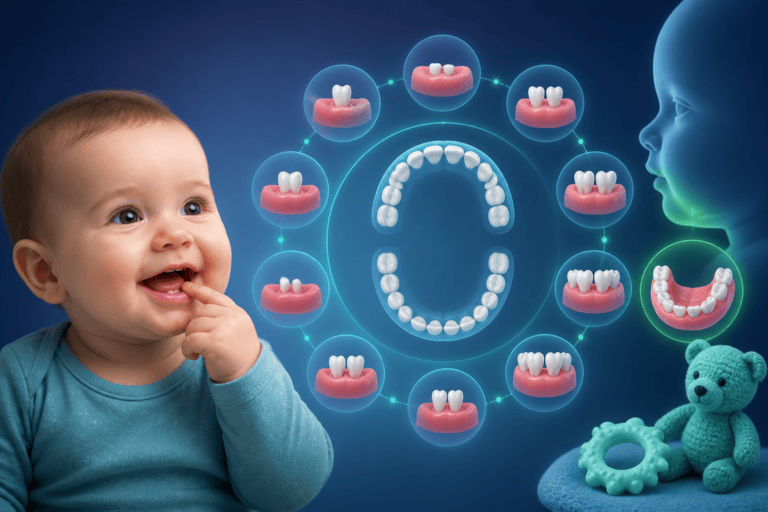
What Order Do Baby Teeth Come In? Complete Teething Chart and Timeline
You know, teething is one of those key phases in a child’s journey. It marks the arrival of...
Read Clinical Guide →Navigate your mental health journey with clinically grounded guides, symptom checkers, and actionable self-help techniques. From distinguishing between panic attacks and anxiety to mastering EMDR and CBT principles, find authoritative, peer-reviewed clarity on TherapyFlux.
Translating psychiatric research and nervous system regulation into actionable everyday self-care.
Recognizing the earliest psychological and physiological markers is the first step toward effective care. Diagnostic benchmarks are synthesized from the National Institute of Mental Health (NIMH) and the American Psychiatric Association (APA).
Major depressive episodes involve persistent low mood, psychomotor changes, and anhedonia (the loss of interest in previously enjoyed activities) lasting at least two weeks.
Sudden autonomic surges, chest tightness, palpitations, and acute feelings of impending dread.
Chronic internal tension, hyper-vigilance, and perfectionism masked beneath strong career performance.
Master physical intervention protocols to interrupt sympathetic nervous system arousal during acute distress.
Inhale for 4 seconds, hold for 4 seconds, exhale for 4 seconds, and hold for 4 seconds to pace the vagus nerve.
Apply a cold compress or cold water to the upper face for 15 seconds to down-regulate elevated pulse rates.
Place one hand on your chest and one on your abdomen; breathe so that only the lower hand moves outward.
Distinguishing between psychological conditions with overlapping somatic and cognitive symptoms.
| Condition A | Condition B | Primary Clinical Distinction | Verified Source |
|---|---|---|---|
| Panic Attack | Anxiety Attack | Abrupt physical peak within 10 minutes vs. gradual escalation linked to perceived stressors. | MedlinePlus |
| Bipolar Disorder | Borderline (BPD) | Sustained neurochemical mood episodes (weeks) vs. interpersonal emotional shifts (hours). | NIMH |
| Sadness | Clinical Depression | Contextual, transient emotional state vs. persistent neurochemical and cognitive disruption. | CDC Health |
Evidence-based clinical mechanisms behind modern psychological interventions.
Eye Movement Desensitization and Reprocessing (EMDR) utilizes bilateral sensory stimulation (saccadic eye movements or alternating tactile taps) to facilitate adaptive reprocessing of maladaptive traumatic memories without requiring extensive verbalization.
Cognitive Behavioral Therapy (CBT) focuses on identifying, evaluating, and restructuring cognitive distortions (such as catastrophizing or emotional reasoning). Patients develop actionable behavioral counter-mechanisms connecting thoughts, emotions, and responses.
Explore newly published therapeutic guides, neuroscience breakdowns, and self-help strategies.
You know, teething is one of those key phases in a child’s journey. It marks the arrival of...
Read Clinical Guide →
Dealing with foot corns can be a real pain—literally. They’re pretty common in the world of foot woes,...
Read Clinical Guide →
Lipo-Mino Injections: Ingredients, Weight Loss Claims, and Safety Lipo-Mino injections have become popular as a possible way to...
Read Clinical Guide →