Can You Rescue a Blackening Tooth? Causes and Solutions
Keeping those pearly whites in good shape is key to feeling great overall. So, when it comes to questions like “Can a blackening tooth be saved?” it’s a biggie for both dentists and patients. Let’s dive into why teeth lose their luster and the ways we can bring them back to life.
Related reading: key steps for Why Do My Eyes Sting When I Cry? Tear Composition and Dry Eye Causes.
Understanding the causes of tooth discoloration can also shed light on key steps for Can Fluoride Reverse an Early Cavity? Remineralization Explained, which is essential for maintaining dental health.
Getting to the Root of Tooth Discoloration
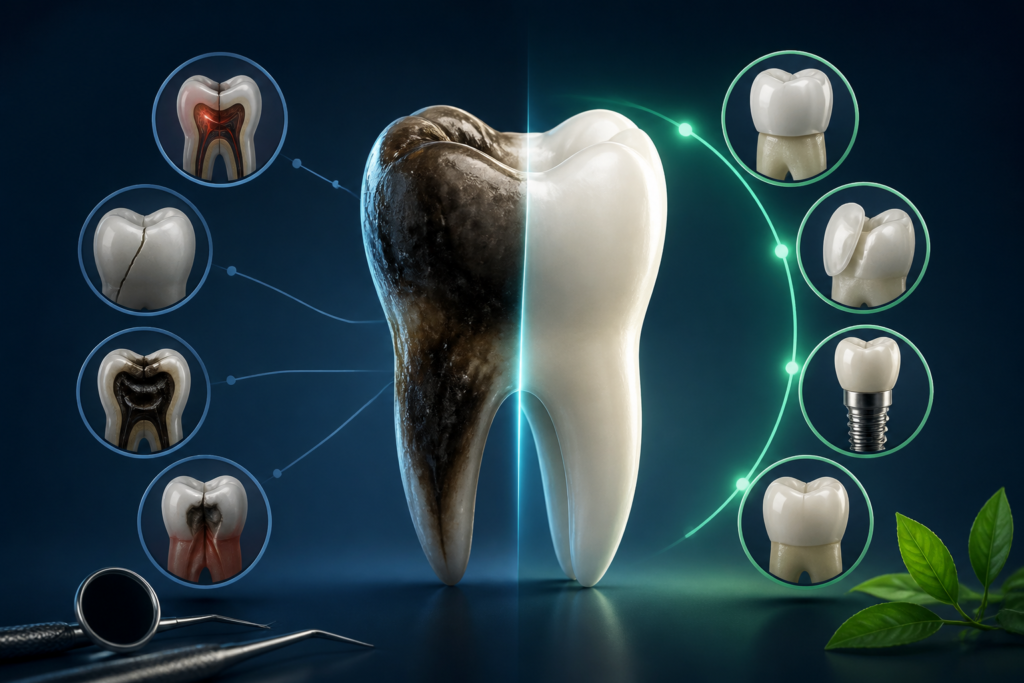
Several reasons could be behind a tooth turning black. Figuring out what’s causing the issue is step numero uno in finding the right fix. Here are some usual suspects:
- Skipping on oral hygiene
- A bump or injury to the tooth
- Cavities or decay
- Taking certain meds or antibiotics
- Too much fluoride
- Your genes
Each issue calls for its own unique approach to get that tooth looking natural again.
Diagnosing Darkening Teeth
To treat it right, you’ve got to diagnose it right. Dentists should use a mix of trusty techniques and tools to nail down the problem:
- Take a good look
- Snap some dental X-rays
- Do percussion tests
- Check pulp vitality
These help gauge how bad things are and what steps to take next.
Restorative Options on the Table
Once you figure out what’s causing that tooth to blacken, it’s time to consider your options. The goal? Bring back both form and function:
1. A Deep Dental Clean
If it’s just a little discoloration from plaque or tartar, a professional cleaning can do wonders. This involves scaling and polishing to sweep off those pesky surface stains.
2. Getting Brighter with Whitening
For stains from food habits or smoking, whitening’s the way to go. Think in-office treatments or take-home kits offered by your dentist.
3. Fixing it with Fillings
When decay is the culprit, dental fillings (CPT code 2140) are the answer. You can go with composite or amalgam, depending on where the tooth sits and what the patient prefers.
As you explore whether a blackening tooth can be saved, you might also find it helpful to check out the What Does a Cavity Filling Look Like? Amalgam, Composite, and Ceramic guide.
4. Root Canal Rescue
If the tooth pulp’s in trouble, a root canal (CPT code 3310) might be needed. This involves pulling out the infected pulp, cleaning up, and sealing the canal to keep infections away.
5. Crowning Glory
For teeth that are really battered, a dental crown (CPT code 2740) might be necessary to restore function and looks. Crowns completely cover the tooth, making it stronger and more attractive.
A Look at Restorative Solutions
| Option | Purpose | Procedure Code | Pros | Cons |
|---|---|---|---|---|
| Pro Cleaning | Clear surface stains | N/A | Fast, no fuss | Only tackles surface-level stains |
| Whitening | Brighten tooth color | 99188 | Good for external stains | Not a lasting fix |
| Fillings | Fix decayed teeth | 2140 | Tough, fortifies tooth | Requires drilling |
| Root Canal | Deal with pulp infection | 3310 | Keeps your own tooth | Might need a crown later |
| Crowns | Cover a beaten-up tooth | 2740 | Strong, looks nice | Invasive and pricey |
Insurance Tips and Billing Matters
Getting the billing right is crucial for snagging coverage and reimbursement. Here’s what to keep in mind:
Understanding the causes of a blackening tooth can also shed light on the Dark Lines on Teeth: Stains, Tartar, Cracks, and Decay Explained overview for further insights.
- Check patient’s insurance beforehand
- Stick with the correct CPT codes
- Outline why the treatment is necessary
- Include thorough documentation
Messing these up can land you in the denial danger zone. [1]
Stop Tooth Blackening in Its Tracks
Prevention beats cure every time. Encourage these habits for a brighter smile:
Understanding the causes of a blackening tooth can help you take preventive measures, so be sure to check out the How to Prevent Tooth Discoloration: Daily Habits and Dental Care guide.
- Brush twice a day
- Don’t skip the floss
- Cut back on sugar
- Visit the dentist regularly
- Opt for fluoride toothpaste
These moves can really slash the odds of discoloration and decay.
Navigating Compliance and Avoiding Mistakes
Keeping up with regulations is key for any dental practice. Pitfalls to dodge include:
- Wrong coding
- Weak documentation
- Not checking patient eligibility
- Ignoring changes in billing practices
Being in the know about updates helps avoid these traps. “Staying current with dental coding updates is essential for practice compliance,” points out Dr. Jane Smith, a whiz in dental billing. [2]
Frequently Queried Questions
- Why does a tooth turn black? Could be poor hygiene, trauma, decay, or medication effects.
- Can blackened teeth be turned around? Sure, with the right professional treatments.
- Does tooth whitening last forever? Nope, you’ll need to keep up with it.
- Will insurance cover blackened teeth? Usually, if it’s medically needed.
- Are crowns essential for all blackened teeth? Only for those that are really beat up.
Disclaimer: This content is published strictly for educational and general informational purposes. It does not constitute professional medical, legal, financial, or technical advice. Always consult a certified specialist or licensed professional regarding your specific situation before making decisions.
References
- American Dental Association. “Dental Procedures and Terminology.” ADA, 2023. ADA
- Smith, Jane. “Expert Tips on Dental Billing Compliance.” Dental Economics, 2023. Dental Economics
- Centers for Medicare & Medicaid Services. “Dental Services Billing Guidelines.” CMS, 2023. CMS
- National Institute of Dental and Craniofacial Research. “Oral Health.” NIH, 2023. NIH
- World Health Organization. “Oral Health Fact Sheet.” WHO, 2023. WHO