Dental health is a big part of staying healthy, and cavities are a common worry. People often wonder: Can fluoride make an early cavity go away? This article will help answer that by talking about how it works, what the research says, and what it means in real life for you or your patients.
Understanding the Problem
Cavities, or dental caries, start when acids from bacteria in your mouth wear away your tooth enamel. If you ignore them, these cavities can get worse and deeper into the tooth. Here’s the key question: Can fluoride, a mineral known for keeping teeth healthy, actually stop this early damage through a process called remineralization?
Just as fluoride can aid in remineralization, being informed about your skin's health is crucial, so check out the UV Index and Tanning: Understanding UV Exposure Risks and Skin Safety guide.
For a deeper understanding of dental issues, including how they relate to fluoride treatments, check out the Dark Lines on Teeth: Stains, Tartar, Cracks, and Decay Explained guide.
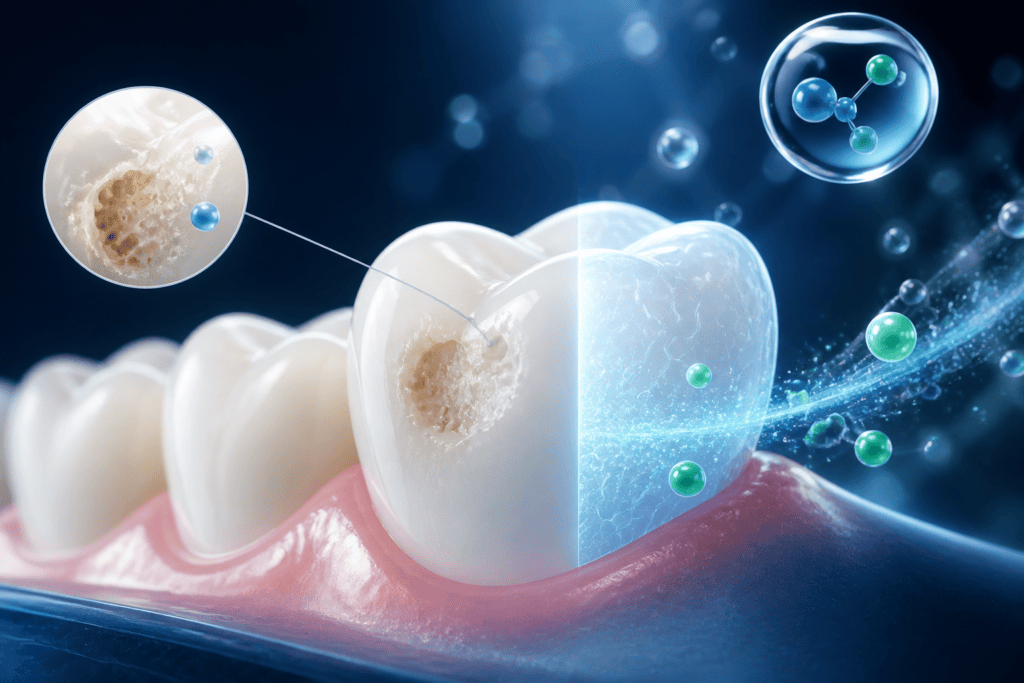
Remineralization happens when minerals like calcium and phosphate go back into your tooth enamel. Fluoride helps by making these minerals stick better and creating a tougher surface. But how good is fluoride at fixing early cavities, and what affects how well it works?
What the Research and Rules Say
Fluoride’s role in dental health is well-researched. Trusted sources like the Centers for Disease Control and Prevention (CDC) and the American Dental Association (ADA) support using fluoride to prevent and maybe even fix early tooth decay.
The CDC says that adding fluoride to water is one of the best ways to stop cavities for everyone. The ADA agrees that fluoride toothpaste and treatments from your dentist can help with remineralization. Still, whether early cavities can be reversed depends on how far along they are and the person’s oral health.
| Question | Evidence / Guidance | Practical Meaning | Source |
|---|---|---|---|
| Can fluoride reverse an early cavity? | Fluoride can enhance remineralization in the early stages of cavity formation. | Effective primarily for initial demineralization (white spots). | CDC, ADA |
| How should fluoride be applied? | Daily use of fluoride toothpaste; professional treatments as needed. | Regular fluoride exposure is necessary for benefits. | CDC, ADA |
| What limits fluoride’s effectiveness? | Diet, oral hygiene, and saliva flow can impact outcomes. | Individual factors may necessitate tailored approaches. | Peer-reviewed dental studies |
Where Things Get Complicated
Using fluoride to fix early cavities isn’t simple and depends on several things. How well you brush your teeth is one. Regular brushing with fluoride toothpaste is good, but if you don’t brush well or often, fluoride might not work as well.
Your diet matters too. Eating lots of sugary or acidic foods can make cavities worse, even when using fluoride. Your saliva helps too, because it can neutralize acids and bring minerals to your teeth. But not everyone’s saliva works the same.
Knowing these things helps dental professionals decide what’s best for each person. Some people might need extra fluoride from a dentist if they’re more likely to get cavities.
What This Means For You
For dentists and healthcare providers, this means looking at each person’s risks and suggesting the right amount of fluoride. If someone gets cavities easily—maybe because of dry mouth or braces—they might need more fluoride treatments.
Teaching people about keeping their mouths healthy can make fluoride work better. That means brushing and eating right, plus regular check-ups to keep an eye on any early signs of cavities.
For everyone else, knowing what fluoride does can help you take charge of your dental health. Using fluoride toothpaste, drinking water with fluoride, and eating a balanced diet are simple ways to prevent and maybe even reverse early cavities.
Key Points
- Fluoride is key in fixing early cavities, mainly for initial enamel damage.
- Regular use of fluoride toothpaste and professional treatments is needed for healthy teeth.
- Things like diet, brushing habits, and saliva can affect how well fluoride works, so dental care might need to be personalized.
- Dentists should check for risk factors and help patients keep their teeth healthy to get the most out of fluoride treatments.
Disclaimer: This content is published strictly for educational and general informational purposes. It does not constitute professional medical, legal, financial, or technical advice. Always consult a certified specialist or licensed professional regarding your specific situation before making decisions.