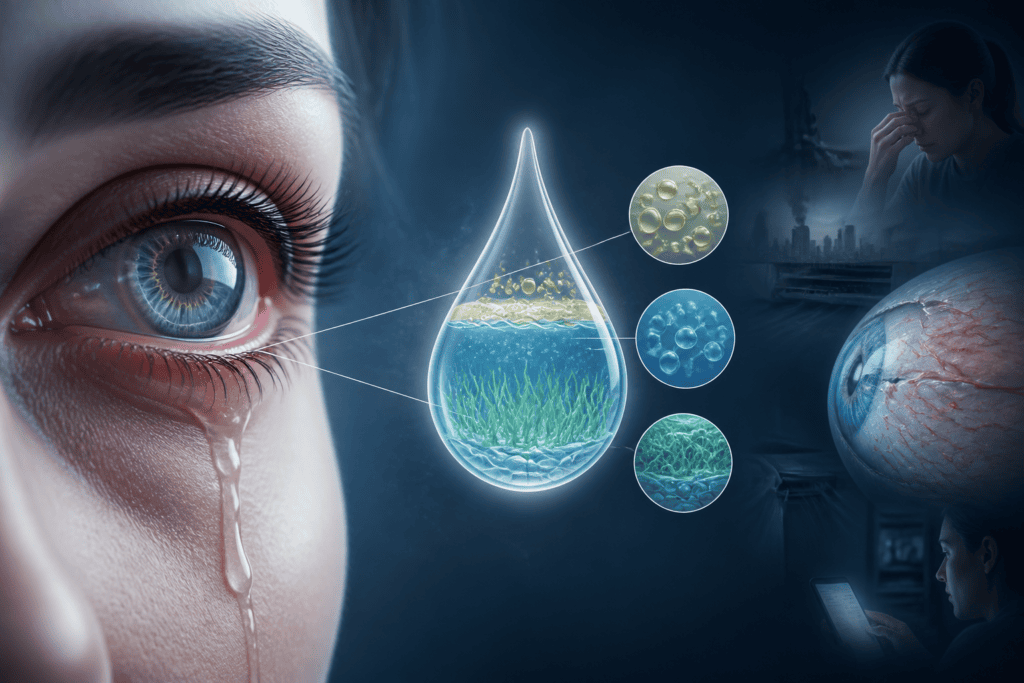
You know, crying is something we all do, but why do some folks feel that pesky stinging in their eyes? Let’s dive into what makes our tears tick—it’s more complex than just salty drops—and how conditions like dry eye syndrome factor in. We’re going to peel back the layers of tear physiology and figure out practical ways to deal with these issues.
The Ins and Outs of Tear Composition
Here’s the thing: our tears are more than just watery droplets. They’re a concoction of water, lipids, proteins, electrolytes, and mucins, each piece playing its part in keeping our eyes in top shape. The tear film is made up of three layers:
- Lipid Layer: This top layer, thanks to the Meibomian glands, acts as a barrier to prevent the evaporation of the watery middle layer.
- Aqueous Layer: Mostly water, this middle section is vital for delivering proteins and electrolytes to nourish and shield our eyes.
- Mucin Layer: At the base, this layer makes sure the tears stick to the surface of the eye, spreading evenly to cover it all.
When these layers are out of whack, discomfort ensues. Stinging when you cry, for instance, could be your eyes’ way of signaling an imbalance.
Why Do Tears Sting When We Cry?
Ever wonder why your eyes sting during a good cry? Often, it’s tied to disruptions in the tear film balance or some underlying eye conditions. Here’s a rundown of common causes:
1. Dry Eye Syndrome
This condition means either not enough tears or poor-quality ones, leading to surface inflammation. Sensitivity kicks in, triggering stinging tears.
2. High Salt Concentration
Emotional tears tend to pack more salt compared to our regular tears. This ups the irritation factor, hence the sting.
3. Irritating Substances
Pollutants, smoke, or even a stiff breeze can aggravate your eyes, making stinging more likely when crying.
4. Contact Lens Use
Contacts can mess with the tear film, causing discomfort. Plus, they can trap debris, adding to the irritation.
The Role of Healthcare Providers
As healthcare providers, it’s on us to understand why eyes sting when crying. This way, we can guide patients more effectively. Here’s what you might consider:
- Comprehensive Eye Examination: A deep dive into tear health and ocular surface conditions is crucial.
- Patient Education: Proper eye care, especially for those with contacts, is key.
- Treatment Plans: Tailor strategies for dry eyes, recommending artificial tears or lifestyle tweaks.
Common Missteps and Myths
Let’s clear some misunderstandings about tears and eye discomfort to avoid ineffective treatments. Watch out for these:
- Assuming All Tears Are the Same: Different tears mean different effects on the eyes.
- Overlooking Environmental Factors: Don’t ignore irritants like smoke or wind.
- Neglecting Comprehensive Diagnostics: Skipping full assessments can lead to wrong diagnoses, like missing dry eye syndrome.
Documentation and Compliance in Practice
Documenting eye complaints accurately is a must. We need thorough records of symptoms, exams, and treatments. And remember, HIPAA compliance ensures patient info stays secure and private.
Effective Management and Workflow Tips
Tackling eye stinging requires a methodical approach. Here’s a practical workflow:
- Initial Assessment: Get a detailed patient history and conduct a full eye exam.
- Diagnostic Tests: Use tools like Schirmer’s test to check tear quality.
- Treatment Strategy: Offer interventions like artificial tears or environmental changes.
- Follow-up: Set up follow-ups to track progress and tweak treatments as needed.
Comparing Tear Types and Their Effects
| Tear Type | Composition | Primary Function | Potential Effects on Eyes |
|---|---|---|---|
| Basal Tears | Low salt, high protein | Keep eyes lubricated | Generally protective |
| Reflex Tears | Moderate salt, moderate protein | Respond to irritants | Can cause temporary stinging |
| Emotional Tears | Higher salt concentration | Emotional response | Potential for stinging |
Wrapping It Up
Getting to the bottom of why eyes sting when crying means acknowledging the intricate nature of our tears and the elements that impact eye comfort. A careful approach—looking at tear production, environment, and individual patient conditions—is our best bet. Educating our patients and keeping detailed records supports better care outcomes.
FAQs
- What can I do to prevent my eyes from stinging when I cry? Give artificial tears a try and steer clear of irritant-heavy spots.
- Are there specific treatments for dry eye syndrome? Absolutely. Options include artificial tears, specific meds, and lifestyle tweaks.
- Can contact lenses cause eye irritation? They can, especially if not cared for properly. Good hygiene is vital.
- Is there a difference between tear types? Yes, and they affect eye comfort in varied ways.
Disclaimer: This content is published strictly for educational and general informational purposes. It does not constitute professional medical, legal, financial, or technical advice. Always consult a certified specialist or licensed professional regarding your specific situation before making decisions.