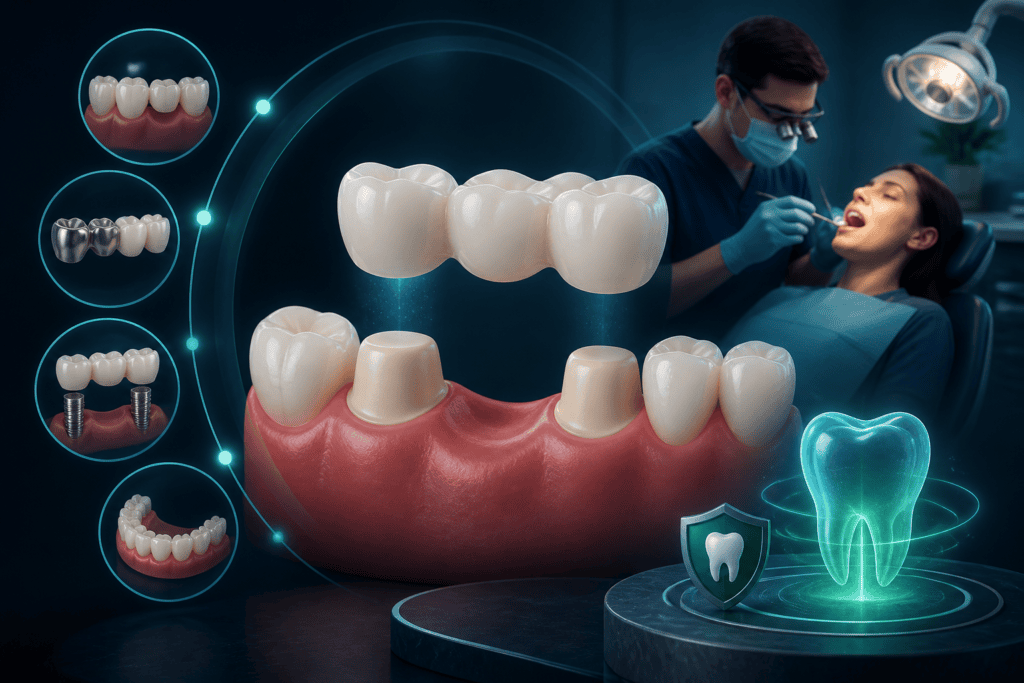
What Is a Dental Bridge? Types, Procedure, Cost, and Lifespan
Dental bridges are a tried-and-true way to replace missing teeth. They help bring back both the look and use of your smile. Think of them as a tool in restorative dentistry, adjusted to fit what each person needs. This guide will walk you through the basics of dental bridges, from the different types, the procedure, costs, and how long they last. All of this should help you make an informed choice.
You may also find our guide to Dermal Fillers for a Cleft Chin: Procedure, Cost, and Results guide helpful.
Understanding the Problem: Tooth Loss and Its Impact
Tooth loss is pretty common, affecting millions around the world. The Centers for Disease Control and Prevention (CDC) says that by age 50, the average American has lost 12 teeth due to things like decay, gum disease, or injury. Missing teeth can make eating and talking difficult and might also lower your self-esteem. Plus, when teeth are missing, the others can start to shift, which can mess up your bite and lead to more dental issues.
Dental Bridges: A Useful Option
Dental bridges can help solve the problems that come with missing teeth. They quite literally “bridge” the gap by using the teeth next to the gap or implants as anchors. A standard dental bridge has crowns on both sides of the gap (those are called abutment teeth) and a false tooth (pontic) filling the space.
Studies have found that dental bridges can last from 5 to 15 years if you take good care of them. This means brushing, flossing, and having regular dental check-ups. The American Dental Association stresses how important oral hygiene and regular dental visits are to make your dental bridge last longer.
Main Comparison: Types of Dental Bridges
There are a few types of dental bridges, each with its own pros and cons. Which one you pick usually depends on where your missing teeth are, the condition of nearby teeth, and what you personally prefer.
| Type | Advantages | Limitations | Best Use Case |
|---|---|---|---|
| Traditional Bridge | Strong, durable, good for back teeth | Needs healthy nearby teeth, might require reducing those teeth | When strong nearby teeth are available |
| Cantilever Bridge | Works when only one neighboring tooth is available | Less stable, higher risk to supporting tooth | Front teeth if there’s one adjacent tooth |
| Maryland Bridge | Minimal changes to nearby teeth, conservative | Less durable, not for molars | Front teeth with strong support from nearby teeth |
| Implant-Supported Bridge | Very stable, helps keep jawbone intact | More costly, takes longer to complete | Several missing teeth with enough bone for implants |
Procedure: Step-by-Step Process
Getting a dental bridge usually means a few trips to the dentist. Here’s a brief overview of what to expect:
- Initial Consultation: The dentist checks out your mouth, talks about your options, and might take impressions or digital scans.
- Tooth Preparation: For traditional and cantilever bridges, the teeth next to the gap are reshaped for crowns.
- Impression Taking: A mold or digital scan is made so they can custom-make your bridge.
- Temporary Bridge Placement: A temporary bridge goes in to protect your teeth and gums while the permanent one is being made.
- Bridge Fabrication: The bridge is custom-made in a dental lab, which could take a few weeks.
- Bridge Placement: The permanent bridge is fitted and adjusted so it feels right and then cemented in place.
Costs and Factors Influencing Them
What you pay for a dental bridge can vary depending on a few things like the type of bridge, materials used, and where you live. Typically, a traditional bridge costs between $500 to $1,200 per tooth. An implant-supported bridge can be quite a bit more, often ranging from $5,000 to $15,000.
Other cost factors include:
- Geographic Location: Prices can differ quite a bit from cities to rural areas.
- Insurance Coverage: Many dental plans cover a portion, but it varies how much they cover.
- Material Choice: Porcelain-fused-to-metal and all-ceramic bridges tend to cost more than metal-only ones.
Common Mistakes and How to Avoid Them
Here are a few common slips to avoid when thinking about a dental bridge:
You may also find our walkthrough on key steps for Clear Ceramic Braces Cost: Pricing, Pros and Cons, and Insurance helpful.
- Ignoring Oral Hygiene: If you don’t keep up good hygiene, you risk gum disease which can make the bridge unstable.
- Choosing the Wrong Type: Not all bridges work for every situation. Talk with your dentist about the best fit for you.
- Neglecting Regular Dental Visits: Regular check-ups help ensure the bridge is in good shape and catch any problems early.
Decision Framework: Choosing the Right Dental Bridge
Picking the right dental bridge involves a few steps. Here’s a simple framework you can follow:
- Assess Your Needs: Think about where the missing teeth are and check the condition of the nearby teeth.
- Consult with Your Dentist: Go over your options, costs, and procedures to find out what works best for you.
- Evaluate Insurance and Budget: Look at your insurance and budget to see what financial impact you’ll be facing.
- Consider Longevity and Maintenance: Weigh up how long each type of bridge lasts and the care it requires.
- Make an Informed Decision: Choose the option that gives you the best mix of function, looks, and cost.
Final Recommendation
Dental bridges are a trusted choice for replacing teeth that are missing, offering benefits for both function and appearance. When you’re deciding on a dental bridge, consider your specific needs, talk to your dentist, and understand the costs involved. By working through the decision process carefully, you can pick a dental bridge that suits your long-term oral health goals.
Disclaimer: This content is published strictly for educational and general informational purposes. It does not constitute professional medical, legal, financial, or technical advice. Always consult a certified specialist or licensed professional regarding your specific situation before making decisions.