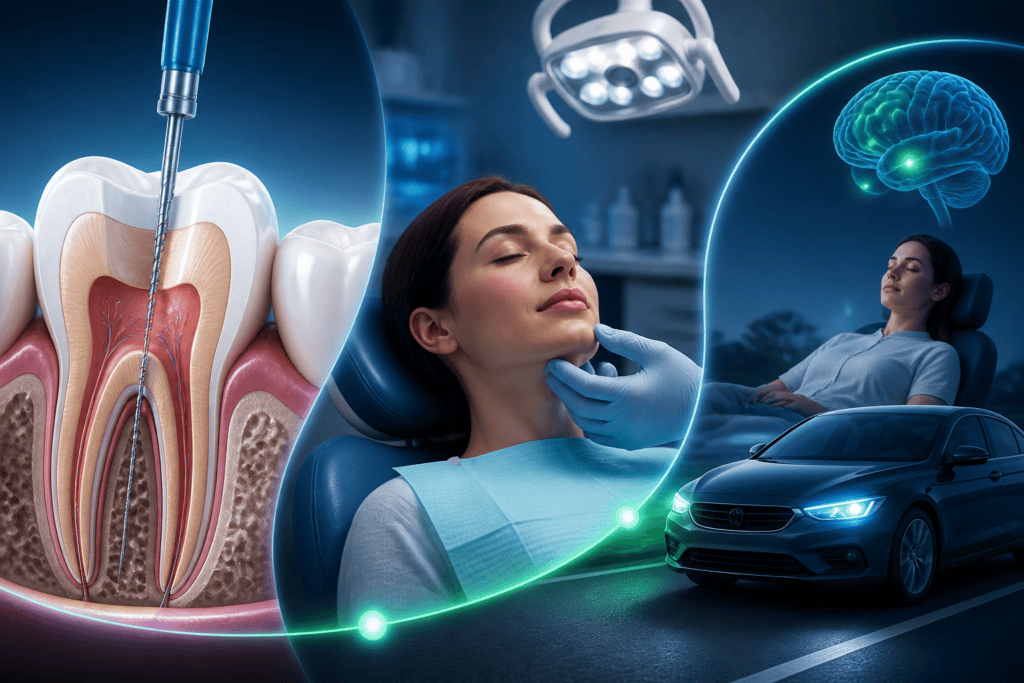
Having a root canal might feel a bit intimidating, especially when it comes to figuring out what you can or can’t do afterward—like driving. The main concern here is how anesthesia and sedation, commonly used to keep you comfy during the procedure, might affect you. So let’s dive into whether it’s actually safe to hop behind the wheel after a root canal and touch on some key guidelines about anesthesia and sedation.
For a closer look, see our guide to How to Stop Throbbing Pain After a Root Canal: Relief and Red Flags overview.
What’s the Deal with Anesthesia and Sedation for Root Canals?
Root canals are all about treating infection in the tooth’s pulp to save it from needing to be yanked out. Because it’s a bit complex and potentially uncomfortable, anesthesia and sedation are regular sidekicks during the procedure. It’s crucial for both dentists and patients to get a handle on the types of anesthesia and sedation and how they might affect post-procedure activities.
Varieties of Anesthesia and Sedation
- Local Anesthesia: This targets the specific area of your mouth getting the work done, so you’re wide awake but blissfully numb in the treated spot.
- Conscious Sedation: Paired with local anesthesia, this method uses meds to help you chill out while staying awake. Think oral sedatives or nitrous oxide (yep, laughing gas!).
- IV Sedation: A bit more intense, this level—affectionately dubbed “twilight sleep”—keeps you semi-conscious but super relaxed. Not as common for root canals, but an option for those feeling extra anxious.
Each type of anesthesia or sedation can influence your ability to do things like driving in different ways. Let’s explore what that means for practicality and safety, both for you and your healthcare provider.
If you're curious about the effects of sedation on your ability to drive, check out our How Long Does Laughing Gas (Nitrous Oxide) Take to Wear Off? guide for more insights.
Why Driving After a Root Canal is a Big Deal
Driving demands your full cognitive abilities, motor skills, and alertness—all of which can take a hit from anesthesia or sedation. Knowing what risks are at play is vital to keeping patients safe and reducing any potential liability for dentists.
Potential Hiccups
- Delayed Reaction Times: Sedation and even local anesthesia can slow your response time, upping the accident risk.
- Cognitive Impairment: Sedation has a knack for clouding your judgment and decision-making skills.
- Physical Coordination: Local anesthesia might temporarily mess with muscle control in your face, possibly affecting speech and fine motor skills.
Because of these potential issues, it’s super important for healthcare professionals to spell out the dos and don’ts about driving after a root canal.
Common Post-Procedure Guideline Blunders
Providers need to be on the ball when giving out post-procedure instructions. Here are some common missteps:
- Underestimating Sedation Effects: Thinking minimal sedation won’t impact driving at all.
- Lack of Clear Guidance: Not setting specific timeframes for when it’s okay to drive again.
- Neglecting Individual Differences: Overlooking that each patient might react differently to sedation.
Sidestepping these blunders means having a solid plan for after-care communication.
Suggested Procedure for Post-Op Guidelines
Effective communication and solid guidelines can do wonders for both patient safety and peace of mind. Here’s a suggested approach for healthcare providers:
- Pre-Procedure Chat: Go over anesthesia and sedation choices, and chat about possible effects on stuff like driving.
- Hand Over Written Instructions: Supply clear written instructions, detailing the anesthesia or sedation used and advice for post-procedure activities.
- Verbal Reminders: Back up the written info with a verbal rundown immediately post-procedure, ensuring the patient and any companions really get it.
- Check-In Follow-Up: Schedule a follow-up call or appointment to tackle any concerns and confirm adherence to the guidelines.
Here’s a handy comparison table summarizing typical guidelines for driving after different anesthesia and sedation types:
| Type of Anesthesia/Sedation | Typical Effects on Driving | Recommended Waiting Period |
|---|---|---|
| Local Anesthesia | Minimal impairment; may affect speech and coordination | 2-4 hours, or until numbness wears off |
| Conscious Sedation | Moderate impairment; affects reaction time and judgment | 24 hours |
| IV Sedation | Significant impairment; affects awareness and memory | 24-48 hours |
Keep It on the Record: Documentation and Compliance
Good documentation is like having an insurance policy—it maintains compliance and ensures patient safety. Providers should jot down:
- What and How Much: Note the type and amount of anesthesia or sedation given.
- Patient Instructions: Record any instructions, both spoken and written, about post-procedure activities.
- Patient Confirmation: Get and document the patient’s acknowledgment of understanding the guidelines.
These records can be life-savers if any post-procedure snags or questions arise.
Main Points to Remember
Driving after a root canal? It largely hinges on the anesthesia or sedation type. While local anesthesia often means you can drive sooner, sedation might require waiting a day or more. Healthcare providers are key in navigating these decisions, fostering safety and sticking to the rules.
Wrapping It Up
In a nutshell, whether you can drive after a root canal is mostly about the anesthesia or sedation used. Local anesthesia often means you’re back to driving quicker, whereas sedation might keep you off the road for at least 24 hours. It’s up to healthcare providers to help steer patients in the right direction, ensuring both safety and rule-following.
FAQs
- Can I drive myself home after a root canal with local anesthesia?
Usually, yes, once the numbness has worn off, which is typically within 2-4 hours. But hey, having someone come along for the ride is always a good call.
- Is it safe to drive the day after getting conscious sedation?
Nope, best to wait at least 24 hours before driving since sedation can mess with your reaction time and judgment.
- What if I feel fine after IV sedation?
Even if you feel peachy, sticking to the 24-48 hour guideline is crucial because effects can sneak up on you.
- How can I make sure I follow post-procedural guidelines?
Provide clear written and verbal instructions, document all communications, and get patient acknowledgments.
- What risks come with driving too soon after a root canal?
Driving before it’s safe can heighten the risk of accidents due to impaired reactions, judgment, and coordination.
Disclaimer: This content is published strictly for educational and general informational purposes. It does not constitute professional medical, legal, financial, or technical advice. Always consult a certified specialist or licensed professional regarding your specific situation before making decisions.