Nitrous oxide, that breezy little compound with a reputation for giggles, is a mild sedative commonly used in dental offices to smooth over pain and anxiety. But as much as everyone loves a good chortle, the question that lingers in the air more persistently than the gas itself is: “How long until the effects of laughing gas dissipate?” Let’s dive into the curious world of nitrous oxide, its pharmacokinetics, and the practical considerations for healthcare providers to keep patients both safe and serene.
The Effects of Nitrous Oxide: What’s So Funny?
Here’s the punchline: Nitrous oxide is inhaled, and within moments, it’s in your bloodstream heading to the brain like it’s late for a date. Its swift entry and calming effects make it a favorite among dental practitioners who need their patients relaxed faster than you can say “open wide.”
With effects ranging from mild sedation to a brief euphoric tickle and pain relief, nitrous oxide doesn’t overstay its welcome. Once you cut off the supply, it’s exhaled faster than yesterday’s news. This transience is what makes it perfect for procedures demanding a quick turnaround.
Operational Appeal of Nitrous Oxide
Why should healthcare providers care about the fleeting nature of nitrous oxide? Well, because patient schedules love it. Faster recovery means patients bounce back promptly, trimming downtime and enhancing the efficiency of practice operations. Everybody wins. Mostly.
Laughing Gas: When Does the Chuckling Stop?
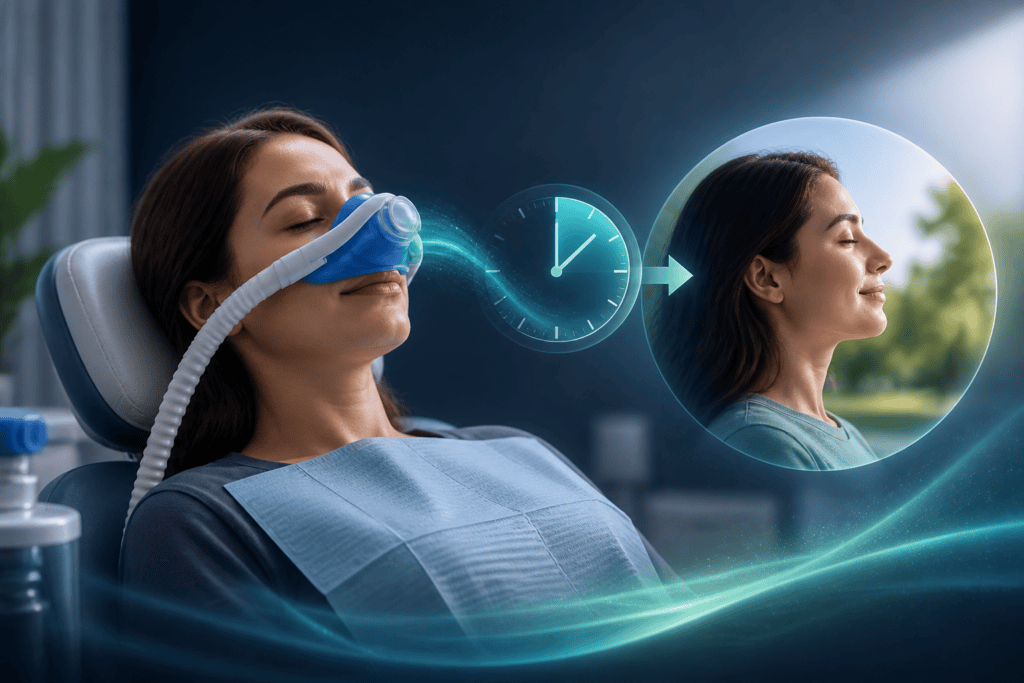
Once the valve is off, most folks find themselves returning to normalcy in a brisk 3 to 5 minutes. Fully back to their pre-chuckle selves? Give it 10 to 15 minutes. It’s almost as quick as a commercial break.
Variables Affecting Recovery Time
Not all recoveries are created equal. Timing can vary based on:
- Duration of Exposure: A longer session might mean a tad more lingering.
- Individual Metabolism: Those with a zippier metabolism process the gas more swiftly.
- Concentration Used: Stronger doses could extend the come-down.
- Patient Age and Health: Older folks or those with certain conditions may take a little longer to rebound.
Steering Through the Laughing Gas: Healthcare Strategies
In the world of nitrous oxide, particularly in dentistry, monitoring is the name of the game. Here are the key plays for ensuring patient safety and keeping things in check:
While you're exploring the effects of nitrous oxide, you might also find the UV Index and Tanning: Understanding UV Exposure Risks and Skin Safety overview helpful for your overall health.
Administration and Observation
- Oxygen isn’t just for breathing; administer it post-procedure to help disperse nitrous oxide.
- Keep an eye on vital signs during and after use; vigilance is your best friend.
- Walk patients through what to expect sensation-wise and the recovery timeline.
Documentation: The Unsung Hero
Documentation isn’t just paperwork—it’s your compliance and safety shield. Remember to:
- Note nitrous oxide concentration and how long it was in use.
- Document any adverse reactions or tortoise-paced recoveries.
- Ensure consent forms are signed, sealed, and delivered—patients should be fully informed before the gas gets going.
Avoiding the Common Trip-Ups
Even an old hand can slip on a banana peel; here’s how to avoid the common missteps with nitrous oxide:
| Common Pitfall | How to Dodge It |
|---|---|
| Skipping post-procedure oxygen | Always cap off with oxygen to speed recovery and clear out residual gas. |
| Lax monitoring of vitals | Maintain a watchful eye to promptly catch any adverse effects. |
| Neglecting patient history | Patient history is your roadmap; use it to avoid contraindications. |
Smooth Sailing: A Suggested Workflow
To keep the gears turning without a hitch, consider this streamlined approach:
- Pre-Procedure Assessment: Dive into the patient’s medical history for surprises.
- Informed Consent: Ensure consent forms are signed while explaining what to expect.
- Administration: Begin with a gentle concentration and adjust according to the patient’s needs.
- Post-Procedure Oxygen: Five minutes of oxygen post-procedure to facilitate a swift recovery.
- Recovery Check: Confirm the patient has returned to their baseline before saying goodbye.
- Document Everything: Record all the juicy details and observations.
Conclusion: Wrapping It Up
Nitrous oxide: the succinct charmer of the anesthetic world. Understanding its quick-tapering nature and implementing prudent management practices ensures patient safety and operational finesse. With the right monitoring, documentation, and patient education, healthcare providers can keep the experience pleasant and efficient.
Frequently Asked Questions
- Is nitrous oxide safe for children? Indeed, when wielded by trained professionals, it is safe for kids and a staple in pediatric dentistry.
- Can patients drive after receiving nitrous oxide? A short wait—at least 30 minutes—is wise, and they should be certain they feel fully recovered before hitting the road.
- Are there any long-term effects of nitrous oxide? When used properly, nitrous oxide has no known long-term effects, making it a safe option.
- What should a patient do if they feel dizzy after the procedure? Sit or lie down promptly and share this with the healthcare provider posthaste.
- Can nitrous oxide be used for all dental procedures? While it’s versatile, its use depends on the specifics of the procedure and the patient’s needs.
Disclaimer: This content is published strictly for educational and general informational purposes. It does not constitute professional medical, legal, financial, or technical advice. Always consult a certified specialist or licensed professional regarding your specific situation before making decisions.