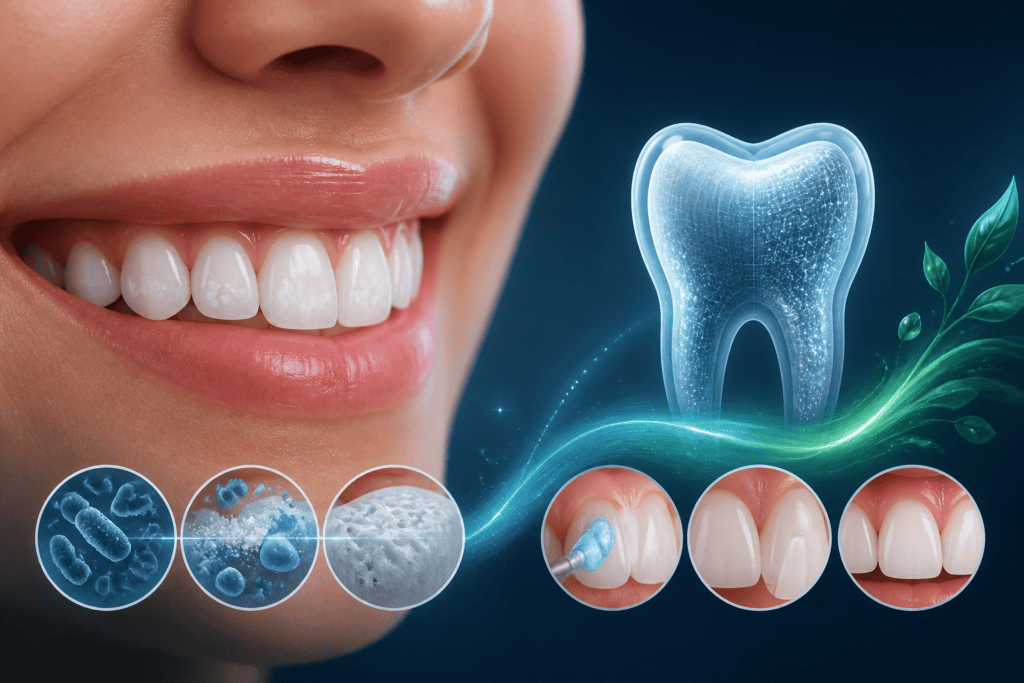
White specks on teeth are a common issue that often leads people to seek advice from dental professionals. If you’re curious about why these spots appear, how to keep your enamel healthy, and what cosmetic treatments are available, this guide is here to help. We’ll walk through these topics with practical solutions based on clinical experience.
What Causes White Specks on Teeth?
These white specks can come from several different things, and each one might need a different approach to treat and prevent them. The key is to figure out what’s causing them in the first place.
Common Causes
- Dental Fluorosis: Too much fluoride exposure
- Enamel Hypoplasia: Issues with enamel development
- Poor Oral Hygiene: Plaque building up
- Dietary Habits: Eating or drinking acidic things
Dental fluorosis often happens in places where there’s a lot of fluoride in the water. Enamel hypoplasia is when enamel doesn’t form properly. Poor oral hygiene and diet habits can cause the surface of your teeth to weaken, leading to those visible white specks.
How to Take Care of Your Enamel
Keeping your enamel strong and healthy is key to preventing and reducing white specks. Here are some practical ways to care for your enamel.
Daily Oral Hygiene
- Brush twice a day using fluoride toothpaste
- Floss daily to clean between your teeth
- Use a soft-bristled toothbrush to clean gently
Change What You Eat and Drink
- Cut back on acidic foods and drinks
- Eat more calcium-rich foods to strengthen enamel
- Stay hydrated to help saliva protect your teeth
Encouraging these habits can greatly lower the chances of enamel damage and the development of white specks.
Cosmetic Treatments for a Better Look
If you’re thinking about cosmetic options, there are several treatments that can improve the look of your teeth. Knowing what choices you have will help you decide what’s best.
Treatment Options
- Teeth Whitening: Makes teeth lighter overall
- Microabrasion: Removes thin layers of enamel
- Veneers: Covers specks with a porcelain layer
- Composite Bonding: Reshapes and changes tooth color
Each of these treatments works best for different situations. For instance, teeth whitening might not be the best for severe fluorosis, while veneers or bonding could work better.
Comparing Cosmetic Treatments
Here’s a table to help compare different cosmetic treatments based on important factors.
| Treatment | Procedure Time | Durability | Cost Range | Suitability |
|---|---|---|---|---|
| Teeth Whitening | 1 hour/session | 6-12 months | $200-$500 | Mild cases |
| Microabrasion | 30 minutes | Permanent | $300-$600 | Superficial stains |
| Veneers | 2-3 visits | 10-15 years | $800-$2,500/tooth | Severe specks |
| Composite Bonding | 1 hour | 5-7 years | $300-$600/tooth | Moderate specks |
Following Treatment Protocols
Dentists need to follow certain protocols when suggesting and performing cosmetic treatments. This makes sure everything is safe and effective.
Things to Keep in Mind
- Get informed consent from patients
- Do thorough patient assessments
- Document treatment plans carefully
- Adhere to ADA guidelines
By following these standards, dental providers can reduce risks and keep patients happy.
FAQs About White Specks on Teeth
- Are white specks on teeth permanent? With the right care and treatment, they can be reduced or eliminated.
- Can enamel care prevent white specks? Yes, taking care of your enamel can lower the risk of them forming.
- Is teeth whitening effective for white specks? It can help appearance, but severe specks might need more than just whitening.
- How often should I visit the dentist? Visiting twice a year is recommended for the best oral health.
- Do cosmetic treatments last forever? They last for varying lengths of time; veneers and bonding need maintaining.
Disclaimer: This content is published strictly for educational and general informational purposes. It does not constitute professional medical, legal, financial, or technical advice. Always consult a certified specialist or licensed professional regarding your specific situation before making decisions.
Dealing with white specks on teeth involves knowing their causes, taking preventive steps, and considering cosmetic treatments. This guide is here to help healthcare providers improve patient outcomes with informed, careful, and effective dental care strategies.