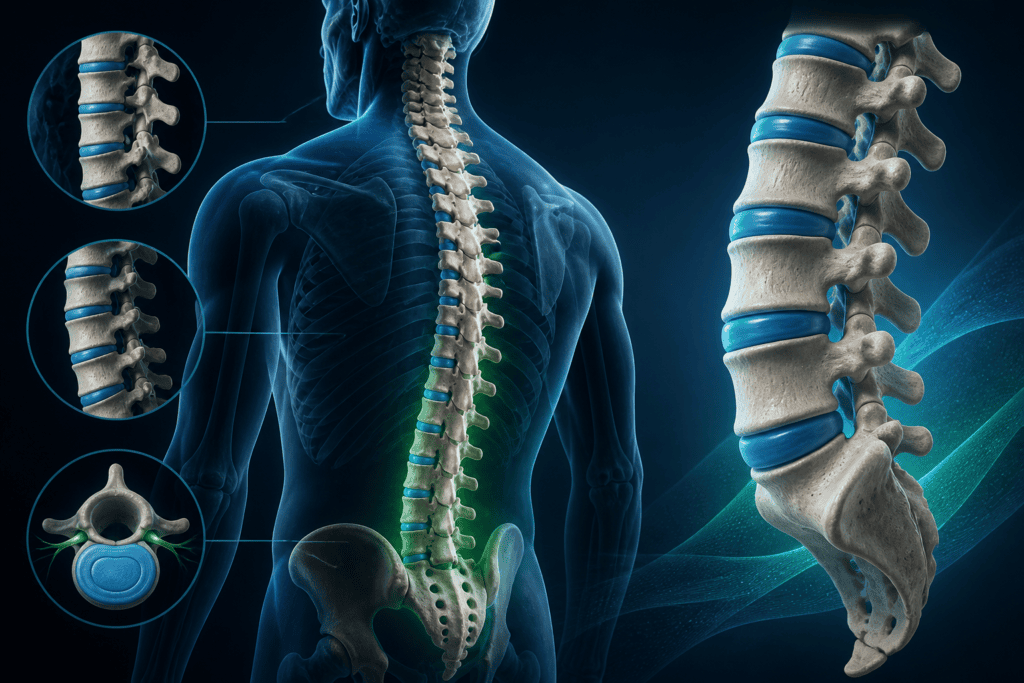
Ah, the spine. That pivotal structure without which we’d all just be floppy marionettes. Healthcare insiders, coders, and billing aficionados alike should take heed: understanding its anatomy is as critical as it is intricate. Here, we embark on an exploration of vertebrae, discs, and those trusty back bones. Because this is not just about keeping a straight back—it’s about getting the medical and financial details straight, too.
Pillars and Protections
Why the fuss over spine anatomy? Because this bundle of bones and nerves pulls triple duty: it supports, protects, and lets us twist and turn like we’re auditioning for a Cirque du Soleil act. Misinterpret these elements at your peril. An incorrect diagnosis could lead to more than just a chiropractor’s raised eyebrow. It could seriously derail patient care and muddle up those all-important coding and billing processes.
Research and Regulatory Ruminations
To dissect the spine, divide and conquer—five regions to be precise: cervical, thoracic, lumbar, sacral, and coccygeal. Each segment has its quirks and peculiar functions. The cervical, for instance, is not just about holding your head high—it’s a critical player in stability and grace. Meanwhile, the lumbar division takes on the heavy lifting, literally. According to the wise heads at the National Institutes of Health (NIH), each contributes to our equilibrium and sprightliness.
Enter the intervertebral discs—the unsung heroes of shock absorption, saving our vertebrae from a life of friction and premature wear. The Centers for Medicare & Medicaid Services (CMS) are sticklers here, demanding exactitude in documenting spine issues. Given the prevalence and complexity, who can blame them?
| Question | Evidence / Guidance | Practical Meaning | Source |
|---|---|---|---|
| What are the primary components of the spine? | Spine is composed of vertebrae, discs, ligaments, and muscles. | Understanding these components is essential for diagnosis and treatment. | NIH, CMS |
| Why is accurate spine anatomy knowledge important? | Ensures proper diagnosis, treatment, and coding. | Improves patient outcomes and billing accuracy. | NIH, CMS |
| What role do intervertebral discs play? | Act as shock absorbers between vertebrae. | Help prevent friction and allow flexibility. | NIH |
When Theory Meets Real Life
Now, let’s venture into the jungle of real-world spine conditions: herniated discs, spinal stenosis, and the like. Diagnosing these isn’t straightforward: you need precision imaging and a keen eye, which can differ greatly depending on who’s holding the chart and where. Then there’s the labyrinth of coding and billing. With the American Medical Association (AMA) issuing guidelines, you’d think it’d be cut-and-dried. Yet, variations in payer requirements and documentation styles can twist things up faster than a yoga instructor.
Putting Knowledge to Work
Clinicians, it’s time to roll up those sleeves. Deep anatomical insights serve as the roadmap for assessments and treatment plans. Pinpointing problematic vertebrae helps steer surgical decisions or tailor physical therapy. And those discs? Understanding them could be the linchpin for a non-invasive therapy approach.
For coding and billing maestros, anatomical knowledge isn’t just academic; it’s a shield against costly errors. Brush up with training sessions that focus on anatomy’s impact on coding accuracy and compliance. Hungry for more? Check out Therapy Flux for additional wisdom.
Essential Nuggets
- The spine’s intricate anatomy comprises vertebrae, discs, and supporting elements.
- A firm grasp on spine anatomy is paramount for effective diagnosis, treatment, and coding.
- Reliable research and guidelines form the bedrock for sound clinical and coding practices.
- Applying spine anatomy knowledge in real-world scenarios can boost patient results and optimize billing flows.
Disclaimer: This content is published strictly for educational and general informational purposes. It does not constitute professional medical, legal, financial, or technical advice. Always consult a certified specialist or licensed professional regarding your specific situation before making decisions.