Baby Teeth Eruption Order: Age-by-Age Chart and Teething Guide
Teething is one of those big moments in a little one’s life, marking a key point in their early development. Knowing the order of when those tiny pearls show up can be super helpful for everyone—parents, healthcare folks, and even those involved in coding and billing. This handy guide offers an age-by-age chart along with teething tips, acting like a trusty road map through the wild world of oral development.
Getting to Know Baby Teeth: Background and Context
They might be small, but baby teeth—also called primary or deciduous teeth—are big players in a child’s health game. These little chompers not only make munching and talking easier, but they also keep space open for the adult teeth to come. Usually, a full gang of 20 primary teeth makes its grand entrance by age three, laying the groundwork for a stellar dental future.
Typically, baby teeth start popping up around the six-month mark and keep coming until about three years old. But here’s the thing: there’s a lot of wiggle room in what’s considered “normal.” Timing can be swayed by factors like genes, diet, and general health.
Baby Teeth Eruption Order: Age-by-Age Chart
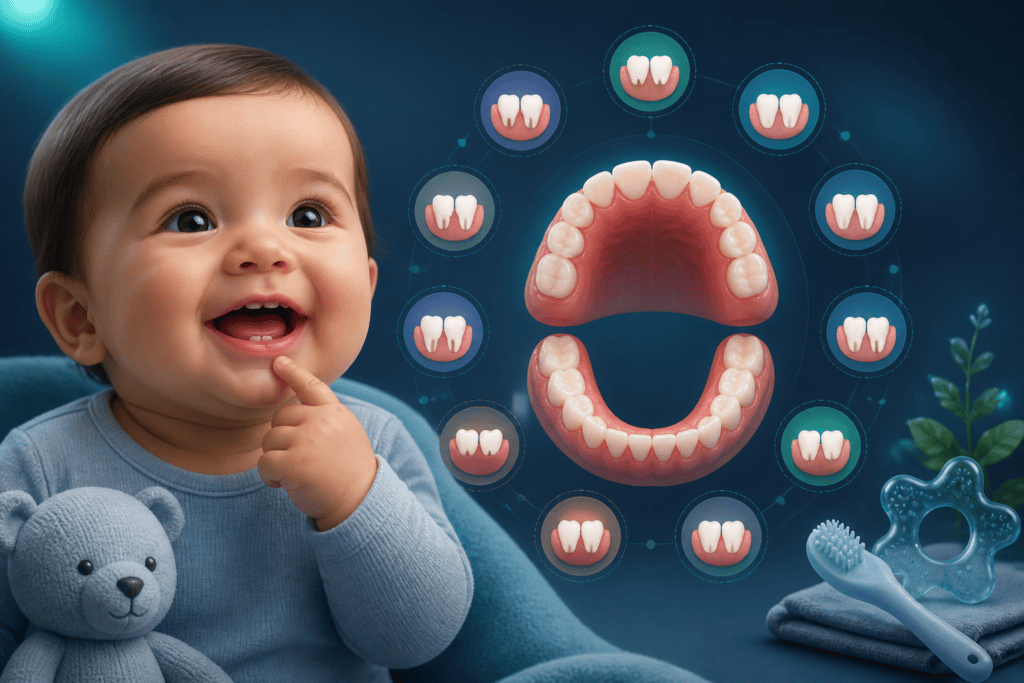
Most of the time, baby teeth follow a pretty predictable debut pattern. Check out the chart below to see the usual sequence and age window for each type of tooth:
| Tooth Type | Age Range for Eruption (Months) | Number of Teeth |
|---|---|---|
| Central Incisors | 6-12 | 4 |
| Lateral Incisors | 9-16 | 4 |
| First Molars | 13-19 | 4 |
| Canines (Cuspids) | 16-23 | 4 |
| Second Molars | 23-33 | 4 |
From the chart, you’ll see that central incisors are the trailblazers, with lateral incisors, first molars, canines, and second molars tagging along. This order isn’t just for show—it supports effective chewing and chatting.
Teething and Its Impact on Healthcare Providers
Teething, as natural as it is, can be a bit of a bumpy ride for babies—and a nail-biter for parents. Healthcare professionals step in as the calming guides, providing reassurance and practical advice. Drooling, fussiness, and a slight uptick in temperature are common teething tales. Healthcare heroes can inform parents about soothing techniques, like teething rings or giving the gums a gentle rub with a clean finger.
On the flip side, watch out for signs of atypical teething, like teeth taking their sweet time or growing in all lopsided, which might hint at deeper issues. Spotting these quirks early on can nip potential problems in the bud and keep oral health cruising smoothly.
Comparison: Typical vs. Atypical Eruption Patterns
Knowing the difference between typical and atypical teething patterns is crucial. Here’s a side-by-side to help spot any red flags:
| Pattern | Characteristics | Potential Concerns |
|---|---|---|
| Typical Eruption | Falls within the usual age range and follows the expected order | Usually means healthy growth |
| Atypical Eruption | Significantly off-timed or unordered | Might suggest developmental problems or nutritional gaps |
If atypical teething patterns pop up, consider recommending a visit to a pediatric dentist. Early action can address issues before they snowball into bigger dilemmas.
Avoiding Common Pitfalls in Teething Management
In the world of teething, some common mistakes can trip up the process. Steer clear of these missteps to help parents and their teething tykes through this stage:
- Over-relying on Meds: Going overboard with things like topical anesthetics or pain relievers might hide symptoms or lead to hiccups.
- Ignoring Atypical Signs: Brushing off delay or odd eruption patterns could mean missing a chance for early help.
- Confusing Symptoms: Not every symptom points to teething—fevers, diarrhea, or rashes could spell other health concerns.
Decision Framework for Healthcare Providers
To manage teething and tooth eruption effectively, healthcare providers might find this framework handy:
- Evaluate Symptoms: Check out if the child’s symptoms match typical teething, or if there’s something else in the mix.
- Watch Eruption Patterns: Use the chart to follow the child’s tooth timeline and notice any outliers.
- Inform Parents: Share knowledge about what to expect and how to ease teething woes.
- Refer to Specialists: If things look atypical, suggest seeing a pediatric dentist for more insights.
- Regular Check-Ins: Frequent follow-ups ensure continued support and timely interventions.
Wrapping Up: Fostering Healthy Oral Growth
Grasping the baby teeth eruption order is key for both parents and healthcare pros. Spotting typical patterns and catching atypical cues early lets caregivers ensure kiddos enjoy top-notch oral health. This guide, brimming with a handy age-by-age chart and practical tidbits, is here to champion a smooth teething journey.
For more on child development and healthcare techniques, check out what TherapyFlux has to offer.
Disclaimer: This content is published strictly for educational and general informational purposes. It does not constitute professional medical, legal, financial, or technical advice. Always consult a certified specialist or licensed professional regarding your specific situation before making decisions.