When it comes to pediatric dentistry, it’s important to know how a child’s teeth develop. This is crucial for healthcare providers, parents, and caregivers. One big milestone is when the 2-year-old molars show up. These molars can cause discomfort, and managing that pain is key. Here, we’ll explore when these molars usually appear, why they’re important, and how to help ease the discomfort they can cause.
Timing and Development of 2-Year-Old Molars
The second molars, often called the 2-year-old molars, usually show up between 23 to 33 months of age. These are part of the primary set of molars. They help kids chew and grind food properly. Unlike the earlier teeth like incisors and canines, molars are bigger and flatter. They’re just right for breaking food down into pieces that are easy to swallow.
Every child is different, so these molars might come in a little earlier or later without any problems. Knowing the typical timeline can help set expectations and get ready for any issues that might come up during teething.
Why 2-Year-Old Molars Matter
These molars are more than just a milestone. They affect a child’s nutrition and oral health. Properly aligned molars make chewing, digestion, and nutrient absorption better. Healthy molars also help keep the rest of the teeth in line, which can prevent future orthodontic issues.
Pediatricians and dentists should guide parents on caring for teeth during this time. This includes tips on brushing and why regular dental check-ups are important to keep teeth healthy and avoid cavities.
Common Signs of Teething and Discomfort
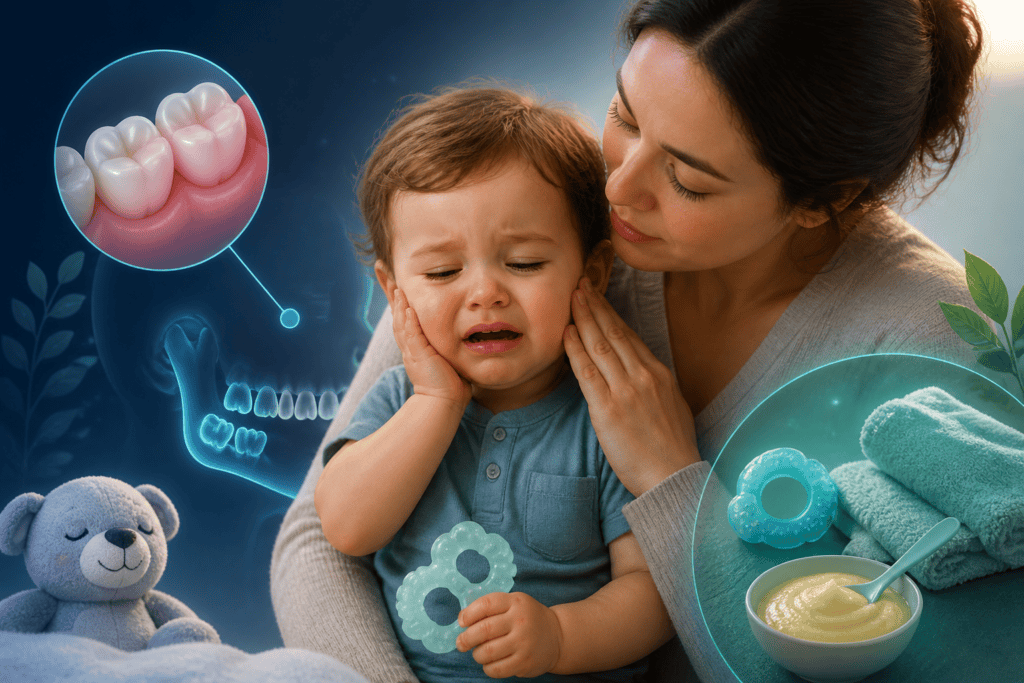
Spotting the signs of teething helps caregivers provide relief when it’s needed. Here are some common signs that the molars are coming in:
- Increased drooling
- Chewing on objects
- Irritability or fussiness
- Swollen or tender gums
- Sleep disturbances
- Slight increase in body temperature
These symptoms can vary. Some kids might feel only a little discomfort, while others could experience more pain. Healthcare providers can assure parents that these symptoms are temporary and manageable.
How to Soothe Toddler Pain
You can manage teething pain with home remedies and, if needed, medical help. Here are some practical ways:
- Cold Compresses: A cold, wet washcloth on the gums can numb the pain and reduce swelling.
- Teething Toys: Chill some teething rings or toys for the child to chew on.
- Oral Analgesics: Over-the-counter pain relievers like acetaminophen or ibuprofen can help, but check with a healthcare professional first.
- Gum Massage: Gently rubbing the gums with clean fingers can ease the pain.
- Distraction Techniques: Engaging in fun activities can help distract the child from the pain.
Be careful with topical anesthetics unless a professional says they’re safe, as they can be risky for young children.
Documentation and Compliance Considerations
For healthcare providers and billing staff, it’s important to keep accurate records when dealing with teething visits. This ensures that the care given is justified and coded correctly. Here are some common ICD-10 codes related to teething:
| ICD-10 Code | Description |
|---|---|
| K00.7 | Teething syndrome |
| R68.84 | Teething |
Proper coding not only helps with insurance claims but also gives a clear picture of pediatric dental health trends and needs.
Common Mistakes in Managing Teething Pain
Even with lots of information out there, some common mistakes can make teething pain worse. These include:
You may also find our guide to Pelvic Pain After Sex: Common Gynecological and Urological Causes overview helpful.
- Over-reliance on Medications: Using pain medications too often can have side effects.
- Ignoring Dental Hygiene: Skipping oral care during teething can lead to cavities and other dental problems.
- Using Unsafe Teething Products: Some products may be harmful or cause choking.
Educating parents and caregivers about these issues can improve toddlers’ well-being during this stage.
Recommended Workflow for Healthcare Providers
Healthcare providers can follow a structured plan to support families during teething:
- Initial Assessment: Check the child’s symptoms to confirm molars are coming in.
- Parental Guidance: Share detailed information on teething signs and relief methods.
- Pain Management Plan: Recommend suitable pain relief strategies tailored to the child.
- Follow-Up: Schedule regular check-ups to track dental development and address concerns.
- Documentation: Ensure accurate coding and records for teething-related visits.
Key Takeaways
- 2-year-old molars usually appear between 23 to 33 months, but timing can vary.
- Understanding teething symptoms and relieving pain are crucial for a comfortable experience.
- Accurate documentation and coding are vital for healthcare providers managing teething visits.
- Guiding caregivers can help avoid mistakes and improve oral health practices.
By understanding the challenges and solutions related to 2-year-old molars, healthcare providers can better support toddlers and their families during this important developmental stage.
Related reading: practical Six-Year Molars: When They Erupt, Symptoms, and Dental Care.
Related reading: practical Two-Year Molars: Signs of Eruption, Timeline, and Pain Relief.
Disclaimer: This content is published strictly for educational and general informational purposes. It does not constitute professional medical, legal, financial, or technical advice. Always consult a certified specialist or licensed professional regarding your specific situation before making decisions.