Why Does My Root Canal Tooth Hurt Years Later? Understand the Causes and Retreatment Options
If you’re feeling pain in a tooth that had a root canal long ago, it can be confusing and a bit worrisome. Normally, a root canal is supposed to stop pain, not start it up again years later. But don’t worry, this situation isn’t rare. Let’s explore why a root canal tooth might hurt years after the procedure and what steps can be taken to fix it.
Understanding the Issue: Ongoing Pain After a Root Canal
The main goal of a root canal is simple: remove inflamed or infected tissue inside a tooth to stop pain and prevent more dental problems. But sometimes, pain pops up again. Why?
Here are some common causes:
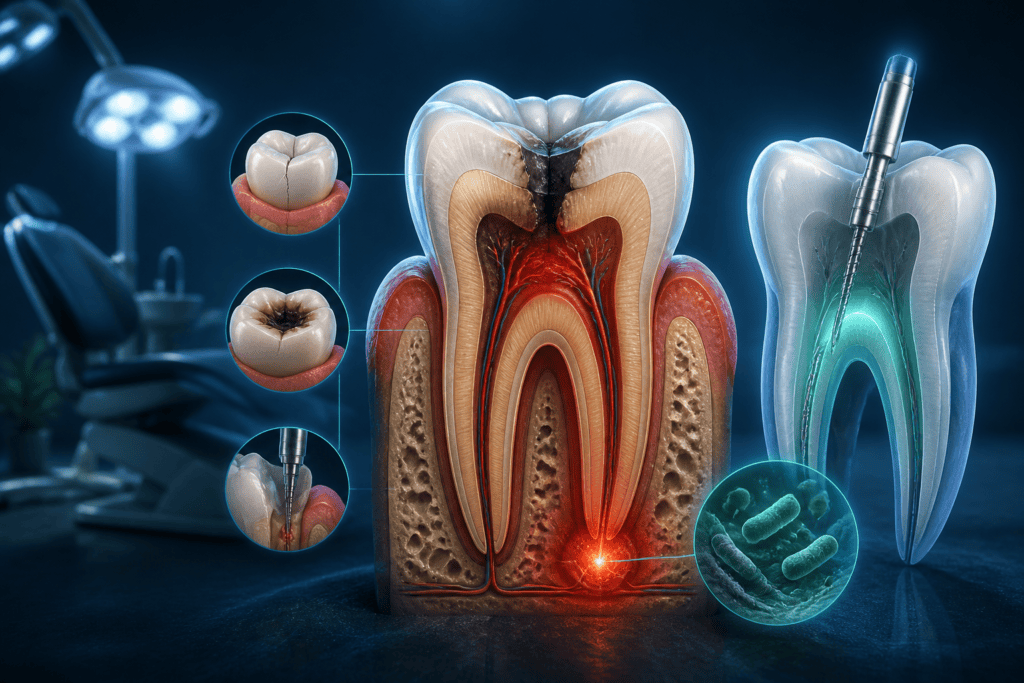
- Missed Canals: Sometimes, not all of a tooth’s canals get cleaned because they’re tricky to find.
- New Decay: If the tooth gets new decay, it can cause problems in the treated area.
- Fractured Tooth: A crack in the tooth can lead to pain.
- Gum Disease: Issues with the gums can make the tooth area sore.
- Restoration Problems: If a crown or filling isn’t quite right, it can be uncomfortable.
What Do Studies Show?
Research tells us that up to 10% of teeth that have had a root canal might need another look because of ongoing or new issues. One study in the Journal of Endodontics found that missed canals and new infections are big reasons for pain after treatment.
The American Association of Endodontists (AAE) says initial root canal success varies from 85% to 97%. Retreatment is sometimes needed if problems stick around or start again.
Choosing Between Retreatment and Extraction
Deciding to redo a root canal or just take the tooth out involves weighing several factors. Here’s a simple comparison:
| Option | Pros | Cons | Best Situations |
|---|---|---|---|
| Retreatment | Keeps your natural tooth, no need for complex extraction issues | Might not fix pain if there are major structural problems | Missed canals, problems with the crown or filling |
| Extraction | Removes the pain source, solves big structural issues | Losing the natural tooth, may need complex repairs | Severe cracks, lots of decay |
Retreatment is usually the first choice if the tooth is still strong. But if the tooth is badly damaged or previous efforts didn’t work, extraction might be the way to go.
Guidelines for Healthcare Providers
It’s important for healthcare providers to grasp the details of root canal retreatment. Good communication with patients about their symptoms, and using advanced imaging like CBCT (Cone Beam Computed Tomography), helps in making a correct diagnosis.
- Diagnosis: Use detailed images to find missed areas or decay.
- Treatment Planning: Decide if retreatment or extraction is better.
- Patient Communication: Clearly outline the pros and cons of each choice.
Avoiding Common Errors in Pain Management
Here are some common mistakes to dodge when dealing with pain after a root canal:
- Ignoring Symptoms: Thinking any pain is normal without checking can lead to problems.
- Insufficient Imaging: Just using traditional X-rays might miss tricky spots.
- Delayed Treatment: Waiting too long could make things worse, leading to harder treatments.
Step-by-Step Approach to Decision-Making
- Assess Symptoms: Find out all you can about the pain and how often it happens.
- Do a Thorough Exam: Use advanced imaging to look at the tooth and canal system.
- Consider Options: Think about retreatment vs. extraction based on the tooth’s condition and what the patient wants.
- Talk It Through with the Patient: Clearly explain what you found and the treatment options.
- Create a Treatment Plan: Make a plan that fits the patient’s needs and follows clinical guidelines.
Final Thoughts
It’s not unusual to have pain in a tooth that’s had a root canal. Often, it can be fixed with the right retreatment. Healthcare providers should use the best tools to find out what’s wrong and talk through all the options with the patient. Remember, choosing between retreatment and extraction should be a team decision, taking into account both medical facts and what the patient wants.
Disclaimer: This content is published strictly for educational and general informational purposes. It does not constitute professional medical, legal, financial, or technical advice. Always consult a certified specialist or licensed professional regarding your specific situation before making decisions.