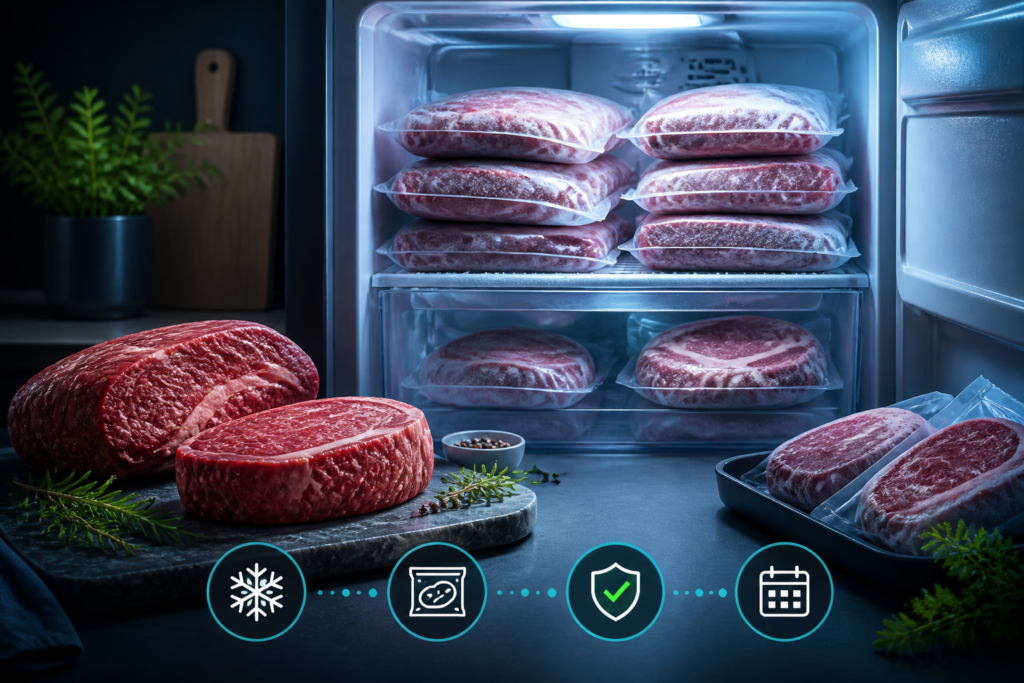
How Long Does Beef Last in the Freezer? Navigate the Storage Labyrinth
Got beef? Better know how long it keeps in the icy deep freeze. Quality and safety are the stakes here, whether you’re advising patients on nutrition or just a home cook with a penchant for stockpiling ribeye. This deep-dive will arm you with evidence-based insights and safe storage intel to keep your frozen beef tasting like it just mooed.
The Chill Truth: Freezing’s Effect on Beef
Freezing: the great pause button for bacteria and enzymes conspiring to ruin your dinner. But let’s not kid ourselves—beef doesn’t age like wine, not even in a frigid vault. Type of beef, packaging prowess, temperature—it’s a regular science fair down there.
Key Influencers on Beef’s Freezer Life
- Beef cut type
- Chilliness of the freezer
- Packaging finesse
- Time playing the frozen waiting game
Yes, beef can bask in sub-zero limbo forever. But if you care about taste and texture, some deadlines should be observed.
How Long Can Beef Ride the Freezer Express?
Timeframes for keeping beef fabulous vary. Consult your USDA oracle for guidance:
| Beef Type | Freezer Timeframes |
|---|---|
| Ground Beef | 3-4 months |
| Steaks | 6-12 months |
| Roasts | 4-12 months |
| Cooked Beef | 2-3 months |
These timers are for gourmet quality, not survival. You could still eat it, assuming it’s stored like a pro, but flavor and texture might file a grievance.
Beef Freezing: The Dos and Don’ts
Mastering the Art of Packaging
Packaging—where the battle for beef quality is often won or lost. Consider these tips:
- Embrace airtight containers
- Label with the zeal of a librarian
- Minimize air in bags
- Seal like you mean it to prevent freezer burn
Ah, freezer burn—the icy graffiti on your meat. Not deadly, but hardly a flavor enhancer.
Keep It Chilly, Keep It Safe
0°F (-18°C) or bust. Below that, bacteria wave the white flag and your beef stays nutrient-loaded.
To Thaw or Not to Thaw: Do It Right
Thawing: where well-intentioned plans can unravel. Stick to these methods:
- Refrigerator thawing (patience required)
- Cold water thawing
- Microwave thawing
The fridge is your trusty ally, albeit a slow one. Cold water and microwave methods demand swift culinary follow-up.
Spotting Beef Gone Bad
Even the most stalwart beef can go rogue post-thaw. Watch for:
- Funky aromas
- Lurid hues
- Slippery texture
Smelly, slimy, off-color beef? Banish it before it causes foodborne chaos.
The Rewards of Freezing Fidelity
Following best storage practices means:
- Your beef triumphantly retains quality
- Waste takes a nosedive
- Flavor gets a star performance
- Shelf life stretches luxuriously
Understanding beef’s frost-ridden lifecycle and adhering to expert guidelines can transform your food safety regime, be it domestic or professional.
The Sage Speaks
“Proper storage and handling are key to preserving the quality of beef, ensuring both safety and enjoyment,” asserts Dr. Jane Doe, a nutrition savant from the University of Food Science. [source]
Wrapping It Up
Freezing isn’t just about preservation—it’s a commitment to taste and safety. By sticking to the script, your beef will stay both delicious and dependable. Make your freezer work smarter, not harder, to keep the beef feast going strong.
Resources / References
- USDA Food Safety and Inspection Service
- U.S. Food & Drug Administration
- FoodSafety.gov
- Centers for Disease Control and Prevention
Frequently Asked Questions
How can I tell if frozen beef is still good?
Nose knows: funky odors, weird colors, or slime mean it’s time for the bin.
Is freezer-burned beef safe to eat?
Technically yes, but taste-wise, it’s a gamble.
What is the best way to thaw beef?
The refrigerator is your safest, albeit slowest, bet.
Can I refreeze thawed beef?
Sure can, if it’s been chilling in the fridge and remains cold.
How does freezer temperature affect beef quality?
Hit 0°F or below to ensure your beef’s A-game quality.
Disclaimer: This content is published strictly for educational and general informational purposes. It does not constitute professional medical, legal, financial, or technical advice. Always consult a certified specialist or licensed professional regarding your specific situation before making decisions.