Brown spots on teeth can be a bit embarrassing and worrying for many. It’s important to know what causes them, how to prevent them, and how to remove them. This guide will help you understand how to manage these spots—everything from figuring out the problem to fixing it—all while keeping things simple and effective.
Why Do Brown Spots Appear on Teeth?
Brown spots can pop up because of things outside or inside your body. Figuring out what’s causing them is the first step to tackling the issue.
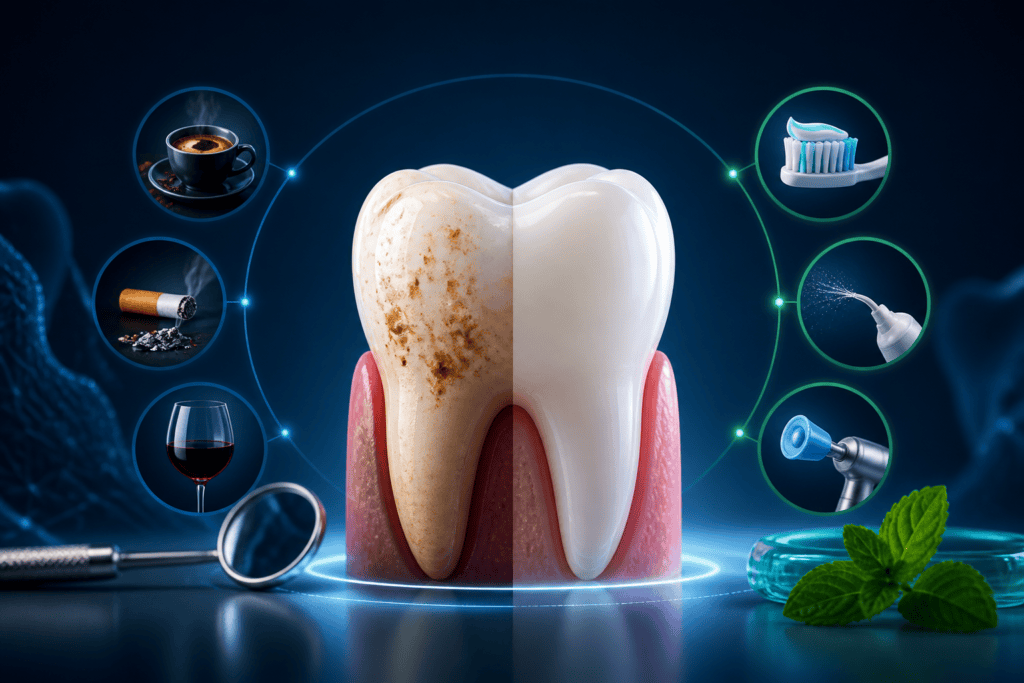
Outside Causes
- Not brushing or flossing well
- Eating foods that stain teeth often
- Using tobacco products
- Drinking a lot of coffee or tea
Inside Causes
- Too much fluoride, known as fluorosis
- Certain medications, like tetracycline antibiotics
- Inherited enamel issues
- Injuries to teeth that are still growing
Getting a precise diagnosis is key. This means using dental imaging and checking patient history. For accurate billing, coders should use the right ICD-10 codes, which are the special codes used for dental discoloration.
How to Prevent Brown Spots
Prevention is really important. There are ways to cut down on the chances of getting brown spots.
Better Oral Hygiene
- Brush your teeth twice a day with fluoride toothpaste
- Floss every day
- Use a mouthwash that kills germs
Change Your Diet
- Eat less of those foods that stain
- Cut back on coffee and tea
- Stay away from tobacco completely
Professional Help
- Visit the dentist regularly
- Get professional cleanings twice a year
- Consider sealants for kids who might have too much fluoride
Healthcare workers should talk with patients to make a prevention plan just for them. It’s also important to write down what they do to prevent spots for future reference and billing.
How to Get Rid of Brown Spots
There are plenty of ways to remove brown spots, from dental treatments to things you can do at home.
Professional Treatments
- Teeth whitening with special agents
- Microabrasion for surface stains
- Veneers for very stained teeth
- Bonding to cover spots
Each of these treatments has its own CPT code. For example, general teeth whitening might use CPT code 99199, and veneers use 2960. Getting the codes right is important for billing and getting reimbursed.
Home Whitening Options
- Whitening strips from the store
- Special whitening toothpaste
- Custom trays with dentist-approved gels
While home treatments can work, it’s essential to know how to use them safely. Providers should keep an eye on how the treatment is going and change plans if needed.
Choosing Between Treatment Options
Picking the right method depends on how bad the spots are, what the patient prefers, and the cost. Here’s a quick look at the differences between going to the dentist and doing it yourself at home.
| Factor | Professional Treatments | At-home Solutions |
|---|---|---|
| Effectiveness | High | Moderate |
| Cost | Higher | Lower |
| Time Required | Quick | Gradual |
| Safety | Supervised | Self-administered |
Doctors and dentists should go over these points with patients to help them pick what’s best, keeping safety and satisfaction in mind.
Staying Compliant and Keeping Good Records
Following the rules for billing and record-keeping is really important. Stick to guidelines for accurate coding and claims to avoid any issues.
Top Compliance Tips
- Use the right ICD-10 codes
- Write down all patient interactions
- Keep detailed treatment records
- Check payer policies regularly
Regular checks and training can help you stay compliant, reduce mistakes, and improve financial management.
Resources to Learn More
FAQs About Brown Spots on Teeth
- What causes brown spots on teeth? They can be caused by poor hygiene, certain foods, tobacco, and some medications.
- Can brown spots be prevented? Yes, with good dental care, changing your diet, and seeing a dentist regularly.
- Are home whitening kits effective? They work okay, but it’s best to use them with professional advice.
- Do brown spots indicate a health problem? Sometimes, yes, like with fluorosis or some medications. You should see a dentist.
- How often should I see a dentist? You should go at least every six months for cleanings and check-ups.
Disclaimer: This content is published strictly for educational and general informational purposes. It does not constitute professional medical, legal, financial, or technical advice. Always consult a certified specialist or licensed professional regarding your specific situation before making decisions.