Does a Dry Socket Heal on Its Own? Recovery Timeline and Care
After a tooth extraction, the last souvenir any patient wants is a dry socket. This pesky little condition can throw a wrench into your recovery, leaving you clutching your jaw and wondering if dental discomfort is a character-building exercise. So, does a dry socket heal on its own, or should you be dialing up your dentist with urgency? The ins and outs of recovery timelines and care strategies deserve a closer look.
Decoding Dry Socket
Dry socket, or in medical parlance, alveolar osteitis, is what happens when the blood clot at a tooth extraction site decides to exit stage left prematurely. The result? A lovely view of exposed bone and nerves, culminating in searing pain and healing delays. Most common post-wisdom tooth extractions, this dental darling affects about 2% to 5% of cases [1].
Culprits and Enablers
- Poor oral hygiene
- Smoking or tobacco indulgences
- Oral contraceptives
- A rough and tumble extraction
- Previous bouts of dry socket
Knowing these risk factors? Pure gold for healthcare providers advising on post-extraction do’s and don’ts.
Can It Heal on Its Own?
Yes, a dry socket can pull itself together without help, though at a tortoise pace and with considerable discomfort. Expect a healing stretch of 7 to 10 days. But throw in some timely treatment, and you may just fast-track your way to relief sans complications.
Intervention or Au Naturale?
While the do-it-yourself healing route exists, professional intervention delivers notable perks:
- Pain relief
- Speedier recovery
- Trimmed infection risk
Foregoing treatment leaves those nerves and bones exasperatingly vulnerable to infection. Thus, medical intervention gets the nod.
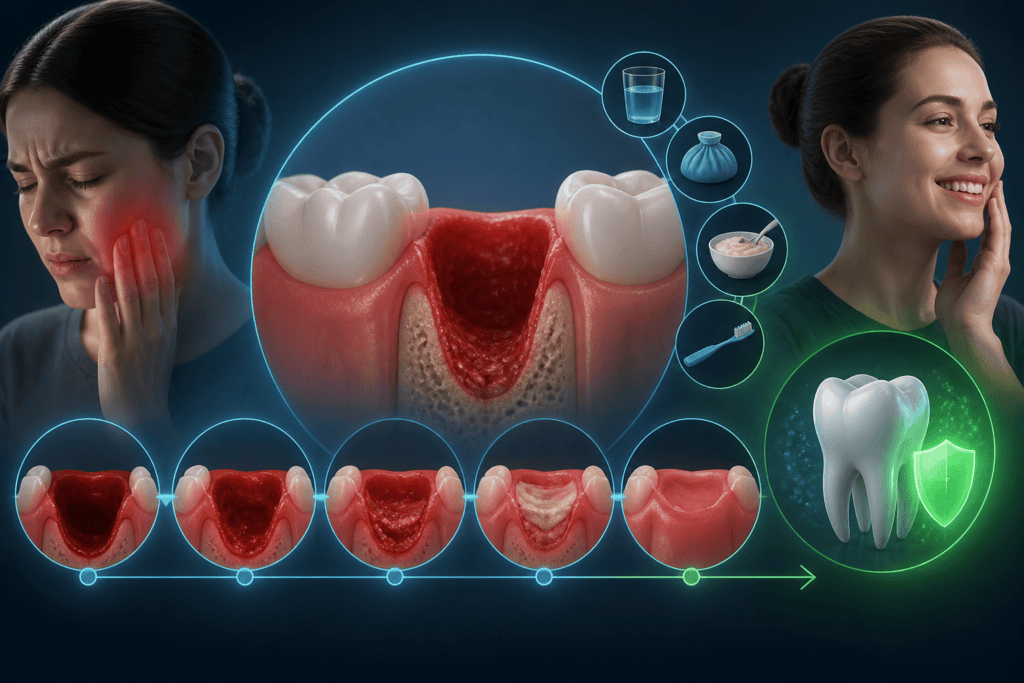
The Dry Socket Recovery Parade
Understanding the recovery symphony helps healthcare providers compose expectations for patients:
Opening Act: Immediate Post-Extraction (Days 1-3)
The opening act post-extraction? Prime time for dry socket shenanigans. Strict adherence to post-op directives is crucial.
- Sidestep smoking and alcohol
- Maintain oral hygiene
- Pop prescribed meds
The Plot Thickens: Onset of Symptoms (Days 3-5)
Enter stage left—symptoms like excruciating pain, odorous breath, and a taste that defies description. These arise around days three to five, marking the time to consult your oral healthcare auteur if dry socket suspicion hits.
Climax: Treatment and Pain Management (Days 5-7)
With the right treatment, pain retreats within a day or two. Treatment avenues include:
- Socket irrigation
- Medicated dressings
- OTC pain relief
Falling Action: Continued Recovery (Days 7-10)
The recovery arc continues, with pain easing significantly. Follow-up care remains the key to sealing the recovery deal.
Dry Socket Care: A Masterclass
Care strategies that hasten healing and bid farewell to discomfort. Healthcare providers should emphasize these gems:
Pro Tips for Immediate Care
- Ditch aggressive rinses
- Cold compresses are your friend
- Stick to prescription paths
Long-Term Tactics for Success
- Regular dental check-ups
- Enroll in smoking cessation
- Better oral hygiene habits
Patient education on these strategies? The secret sauce to dry socket-proofing future dental adventures.
Healthcare Providers: At the Helm
Managing dry socket effectively demands a deft hand from healthcare virtuosos. Assess risk, intervene promptly, and impart preventive wisdom. Accurate procedure coding using CPT codes like 41899 (Unlisted procedure, dentoalveolar structures) ensures the billing side doesn’t hit a dry socket of its own [2].
Crafting Communication and Patience Education
Conveying risks, symptoms, and care methodology calls for clarity. Employ visual aids and layman’s terms to elevate patient comprehension and adherence.
Comparative Analysis of Treatment Options
| Treatment Option | Benefits | Drawbacks |
|---|---|---|
| Medicated Dressing | Immediate pain relief | Requires professional application |
| Mouth Rinse | Reduces infection risk | Less effective for pain |
| Over-the-Counter Pain Relievers | Accessible and affordable | Temporary relief only |
Final Thoughts
While letting nature takes its course is an option, professional intervention in dry socket comes with perks in pain management and speedier recovery. Master the recovery timeline and care strategies, and healthcare practitioners can significantly enhance patient outcomes while sidestepping complications.
Resources / References
- National Center for Biotechnology Information
- American Dental Association
- Mayo Clinic
- WebMD
- Therapy Flux
Frequently Asked Queries
What causes a dry socket? Sketchy oral hygiene, smoking habits, and overly aggressive extractions.
How long does a dry socket last? Without treatment, linger 7 to 10 days.
Can a dry socket heal without treatment? Certainly, but it’s akin to watching grass grow—painfully slow.
What is the best treatment for a dry socket? Medicated dressings and expert care top the list.
Is a dry socket dangerous? Painful, yes; dangerous, potentially, if infection barges in uninvited.
Disclaimer: This content is published strictly for educational and general informational purposes. It does not constitute professional medical, legal, financial, or technical advice. Always consult a certified specialist or licensed professional regarding your specific situation before making decisions.