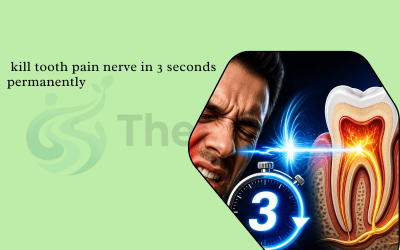
Search data reveals a massive, desperate volume of patients looking for a medical miracle: how to kill tooth pain nerve in 3 seconds permanently. When a patient experiences the agonizing, throbbing pain of acute pulpitis, they do not care about long-term dental health strategies. They want immediate relief. As an industry consultant who has spent ten years auditing emergency clinical protocols, managing dental group practices, and assessing patient outcomes, I can tell you that the intersection between online myths and real-world clinical realities is fraught with danger.
The internet is flooded with dangerous hacks claiming to fry, deaden, or stop dental nerve pain instantly. However, true permanent relief requires structured clinical intervention. Let us look at the hard medical evidence regarding rapid pain cessation, what actually happens to an inflamed dental nerve, and how clinicians achieve fast, lasting outcomes.
Why the Three-Second Fix is an Illusion
Severe toothaches usually stem from symptomatic irreversible pulpitis. This is a condition where the dental pulp—the vascular, nerve-rich tissue inside the tooth—becomes heavily inflamed due to bacterial invasion from deep decay. When a patient applies home remedies like clove oil (eugenol), rubbing alcohol, or over-the-counter benzocaine gels, they might feel relief within seconds.
However, this rapid relief is merely a temporary sensory interruption. It only desensitizes the local nerve endings on the outside surface. The internal pressure and bacterial destruction inside the hard calcified walls of the tooth remain completely unchanged.
In the textbook Endodontics: Principles and Practice, Dr. Mahmoud Torabinejad notes:
“Topical applications do not penetrate the pulp chamber effectively enough to alter the inflammatory process.”
If the underlying bacterial infection is left unmanaged, the inflammation will eventually starve the tooth’s blood supply. This leads to pulp necrosis (tissue death). While the pain might temporarily vanish when the nerve officially dies, the bacteria will continue to multiply. They will eventually travel through the root apex and form a severe bone abscess.
Clinical Realities of Immediate Pain Management
When a patient presents with agonizing dental pain, a structured clinical approach is required. True, rapid pain management relies on a strategic combination of systemic pharmacotherapy and emergency micro-surgical techniques.
- Inflammation drives the intense pulpal pressure.
- Systemic analgesics target the inflammatory pathways.
- NSAIDs block prostaglandin synthesis effectively [1].
- Combined medications offer superior pain relief [1].
- Opioids carry high dependency risks [1].
- Steroids reduce severe acute swelling quickly.
- Antibiotics do not stop pulpal pain.
Clinical data shows that the combination of ibuprofen and paracetamol provides the highest therapeutic efficacy for acute dental pain without the side effects associated with narcotic alternatives [1].
Home Remedies vs. Clinical Intervention
To truly understand how to handle severe tooth pain, we must compare the outcomes of popular internet remedies against established clinical procedures.
| Intervention Type | Mechanism of Action | Speed of Initial Relief | Long-Term Success Rate | Principal Medical Risk |
| Topical Eugenol (Clove Oil) | Localized, temporary numbing of peripheral receptors | 3 to 5 seconds | 0% (Temporary palliative only) | Chemical burns to oral mucosa |
| Emergency Pulpotomy | Surgical removal of inflamed coronal pulp tissue [3] | Minutes (Post-anesthetic block) | 90% to 95% at one year [2, 5] | Re-infection if poorly sealed |
| Full Root Canal Therapy | Complete extirpation of the entire root canal system | Immediate post-procedure | 95% to 98% lifetime success | Instrument fracture; root perforation |
| Systemic NSAID/Acetaminophen | Central and peripheral inhibition of prostaglandins [1] | 20 to 40 minutes | Variable (Depends on pathology) | Gastrointestinal distress; hepatic load |
Emerging Protocols: Moving Beyond Extirpation
For decades, the standard response to irreversible pulpitis was to completely kill tooth pain nerve in 3 seconds permanently by ripping it out via root canal therapy. However, modern endodontic protocols are shifting toward conservative vital pulp therapy. Clinicians are realizing that saving the nerve is often better than destroying it entirely.
- Bioceramic materials seal exposed pulps effectively [2].
- MTA promotes rapid dentin bridge formation [2].
- Vital pulp therapy preserves tooth structure [4].
- Pulpotomies match root canals in relief [3].
- Calcium silicates lower post-operative pain [4].
- Minimally invasive dentistry extends tooth life.
- Pulpal healing is possible under bioceramics [5].
Using tricalcium-silicate cements allows practitioners to remove only the damaged, inflamed portions of the pulp. This leaves the healthy root tissue intact, which is a massive win for the long-term structural integrity of the tooth [4, 5].
Diagnostic Trap: Is It Really a Toothache?
Sometimes, a patient will desperately try to treat a toothache when the tooth isn’t even the primary source of the problem. Misdiagnosing orofacial pain can lead to unnecessary extractions and root canals that completely fail to resolve the patient’s discomfort.
In Orofacial Pain: Guidelines for Assessment, Diagnosis, and Management, the American Academy of Orofacial Pain states:
“Neuropathic pain conditions frequently mimic dental pathologies, leading to inappropriate irreversible dental treatments.”
- Trigeminal neuralgia causes sharp, stabbing shocks.
- Myofascial pain refers tension to molars.
- Maxillary sinusitis mimics upper tooth aches.
- Neuropathic pain requires targeted systemic modulators [7].
- Local anesthetics assist in differential diagnosis [8].
- Inappropriate extractions cause permanent nerve damage.
Before trying to permanently deaden a nerve, a proper clinical examination must confirm the exact source of the pain [7, 8].
What To Do Next
If you are dealing with an unbearable toothache right now, stop looking for internet hacks to kill tooth pain nerve in 3 seconds permanently. Your immediate action plan should be practical and safe. Take a combined dose of ibuprofen and acetaminophen to get the systemic inflammation under control [1]. Avoid applying crushed aspirin or harsh chemicals directly onto your gums, as this causes severe tissue burns. Finally, call an emergency dental clinic immediately to schedule either a pulpotomy or a root canal, which are the only ways to safely resolve the issue for good [3].
Resources & Authority Links
- Analgesics Use in Dentistry: https://www.intechopen.com/chapters/53235
- Treatment Outcomes of Pulpotomy: https://www.tandfonline.com/doi/abs/10.3109/00016357.2014.904534
- Emergency Treatment Pain Systematic Review: https://www.frontiersin.org/articles/10.3389/froh.2023.1147884/full
- Vital Pulp Therapy Overview: https://www.mdpi.com/2077-0383/11/14/4016
- Short-Term Pain Evolution Study: https://www.mdpi.com/2077-0383/11/3/787
- Dental Recommendation Patterns: https://bmcoralhealth.biomedcentral.com/articles/10.1186/s12903-025-05412-w
- Dental Treatment for Neuropathic Pain: https://jada.ada.org/article/S0002-8177(14)60594-5/fulltext
- American Association of Endodontists Pain Control Guidelines: https://www.aae.org/specialty/pain-control/

How long does eugenol clove oil keep a toothache away?
It typically numbs the area for only 15 to 30 minutes without treating the underlying infection.
Will a dying tooth nerve stop hurting on its own permanently?
The acute pain may pause when the nerve dies, but it will eventually return as a painful bone abscess.
What is the fastest medication combination for extreme dental pain?
Clinical studies prove that taking ibuprofen alongside acetaminophen provides the fastest, most effective systemic relief.
Does a root canal completely kill the tooth pain nerve permanently?
Yes, a root canal physically removes the nerve tissue entirely, preventing it from ever sending pain signals again.