The clinical landscape of personality disorders is shifting. For a decade, I have consulted with healthcare organizations and clinical teams on complex case management. One of the most persistent challenges is identifying the “invisible” patient. When most people hear “Borderline Personality Disorder,” they think of outward volatility. They imagine loud conflicts and visible crises. But there is a version of this condition that is silent, efficient, and often found in high-pressure boardrooms or medical offices.
This is what we call High Functioning Borderline Personality Disorder, or more accurately, Quiet BPD.
What is Quiet BPD?
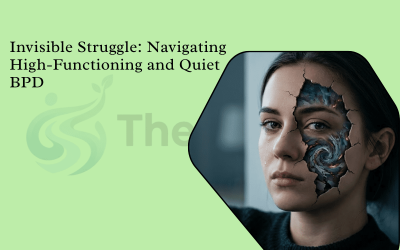
In professional circles, we often refer to this as the “Internalizer” profile. Unlike the classic presentation where emotions are projected onto others, the quiet borderline directs every ounce of turmoil inward. They do not explode; they implode. To the outside world, they appear composed, successful, and perhaps a bit perfectionistic. Internally, they are navigating a storm of self-loathing and a chronic fear of abandonment.
Covert Borderline: A Strategic View
The term what is a covert borderline refers to the same underlying pathology but emphasizes the hidden nature of the struggle. In my experience, these professionals are often your “star players” until the burnout becomes absolute. Because they are so attuned to the needs of others—mostly out of a fear of being rejected—they become expert chameleons.
Key markers of the covert or quiet profile include:
- Extreme guilt over minor professional errors.
- Hiding all signs of personal distress.
- Severe social anxiety masked by competence.
- Feeling like a total fraud daily.
- Cutting off relationships without any warning.
- Self-harm that stays completely hidden away.
- Hyper-focus on others’ subtle body language.
Gender Dynamics and Diagnostic Barriers
We see a significant trend in how these symptoms manifest across different demographics. When searching for a symptoms of bpd in females test, many women find that their behavior doesn’t match the “aggressive” stereotypes found in older textbooks. Society often rewards women for being quiet, compliant, and self-sacrificing. Consequently, a high-functioning woman with BPD might just be labeled a “workaholic” or “intense” rather than someone in need of clinical intervention.
Problem with Traditional Testing
Standard assessments often fail the high-functioning population. If you take a generic quiet bpd test, the questions might ask if you have frequent outbursts or legal trouble. For the high-functioning individual, the answer is “No.” They’re too terrified of consequences to have an outburst.
To get a real sense of the condition, we have to look at the “Internalized Conflict Scale.” Instead of looking for external wreckage, we look for internal erosion.
- Do you blame yourself for everything?
- Is your self-image constantly shifting around?
- Do you feel empty when alone?
- Is your anger strictly directed inward?
- Do you “door-slam” friends quite often?
- Is perfection your only safety net?
- Does criticism feel like a total soul-crushing?
High Cost of High Functioning
There is a massive “competence tax” paid by these individuals. Because they appear to have it all together, colleagues and family members don’t offer the support they actually need. It’s a lonely way to live. They spend so much energy on the “performance” of stability that they have nothing left for actual joy.
In a professional setting, this often leads to a specific type of cycle. The individual joins a new firm, performs at 150% capacity, becomes the “favorite,” and then eventually feels overwhelmed by the expectations they created. They begin to perceive slight shifts in their boss’s tone as a sign of imminent firing. Then, they might quit abruptly to avoid the perceived “rejection” they think is coming.
Practical Steps for Clinical Management
If you are managing or treating a high-functioning professional, the approach must be surgical. You cannot use the same “de-escalation” tactics used for externalizing BPD because there is no external fire to put out. Instead, the focus must be on:
- Validation of the Internal Load: Acknowledge how hard they are working to stay composed.
- Identity Integration: Help them find a sense of self that isn’t tied to their latest professional achievement.
- Boundary Construction: They need to learn that saying “no” doesn’t lead to immediate abandonment.
Moreover, Dialectical Behavior Therapy (DBT) remains the gold standard, but it needs to be adapted. High-functioning patients don’t need to learn how to stop yelling; they need to learn how to stop hating themselves for being human. They need to understand that their “quiet” symptoms are just as valid as the more “dramatic” ones.
The “Boots-on-the-Ground” Reality
I have sat across from executives who have millions in the bank and a “perfect” family, yet they are convinced that if they make one mistake, everyone will leave them. It is a grueling, exhausting state of existence. We must stop using “functioning” as a synonym for “healthy.”
Furthermore, the industry needs to move away from the idea that BPD is a “bad” diagnosis. It’s a spectrum of emotional dysregulation. When we identify the quiet types early, we can prevent the inevitable burnout and help them channel their high empathy and professional drive into something sustainable.
A Quick Reality Check
If you’re wondering if this applies to you or a client, don’t just look at the resume. Look at the “recovery time” after a social interaction.
- Long periods of isolation after work.
- Analyzing every single text message received.
- Physical exhaustion from “holding it in.”
- Extreme sensitivity to “cold” office vibes.
- Never asking for help with tasks.
- Obsessing over tiny social cues daily.
- Total lack of a stable identity.
Closing Thoughts
High functioning BPD is not a badge of honor; it’s a survival strategy. As consultants and clinicians, our job is to see through the mask. We have to provide a space where “not being okay” is safe. It’s about time we stopped ignoring the people who are suffering the most just because they’re doing it quietly.
If we don’t change how we screen for this, we will keep losing talented, brilliant people to a silent crisis. The goal is not just to keep people working. The goal is to help them actually live. This is what we’re aiming for in the next decade of mental health advocacy. It’s a tough road, but it’s one we have to walk down.
1. McLean Hospital (Harvard Medical School Affiliate)
- Source: Redefining Recovery: The Quiet Revolution
- Perspective: McLean is a world leader in BPD research. Their work on “Experiential Avoidance” explains the mechanics of high-functioning BPD—where individuals internalize distress and take extreme measures to escape unpleasant internal states without outward “acting out.”
2. National Institute of Mental Health (NIMH)
- Source: Borderline Personality Disorder: Statistics and Prevalence
- Perspective: This provides the data-driven foundation for your argument. It highlights the high rates of comorbidity (over 80%) with anxiety and mood disorders, which often “mask” the underlying BPD in high-functioning individuals, leading to misdiagnosis.
3. National Education Alliance for BPD (NEA-BPD)
- Source: A BPD Brief: Basic Facts and Lived Experience
- Perspective: This NGO bridges the gap between clinical research and lived experience. Their 2025 conference materials specifically address the “Paradox of Remission”—where symptoms may improve (making someone appear high-functioning), but psychosocial functioning (internal quality of life) remains low.
4. Yale-NEABPD Conference Research
- Source: Yale-NEABPD 2024: Lived Experience and Family Perspectives
- Perspective: This source offers a “Think Tank” style synthesis of how BPD manifests in professional settings. It discusses the “masking” strategies used by individuals to maintain high performance in high-stress environments.
5. SANE Australia / ResearchGate
- Source: Providing Effective Treatment for BPD (AJGP 2025)
- Perspective: A peer-reviewed clinical guide from the Royal Australian College of General Practitioners. It emphasizes the “internalizing” vs. “externalizing” subtype, providing a framework for how clinicians can identify BPD in patients who appear composed and collaborative.
6. PubMed Central (PMC) / NIH
- Source: Experiences of Care by Australians with a Diagnosis of BPD
- Perspective: This large-scale survey (153 participants) explores the “Stigma of Competence.” It provides evidence that individuals who appear high-functioning often struggle to receive help because their distress is not considered “severe enough” by traditional standards.
7. Spectrum Personality Disorder Service
- Source: Living Life Well: A Guide to BPD (2024)
- Perspective: As a Center of Clinical Excellence, Spectrum provides a white paper on “Recovery and BPD” that focuses on functional outcomes rather than just symptom reduction—crucial for defining what “high-functioning” actually looks like in practice.
8. Project Air Strategy for Personality Disorders
- Source: Treatment Guidelines and Fact Sheets
- Perspective: This university-based initiative (University of Wollongong) provides a diverse perspective on the “Social Construction” of BPD, arguing that high-functioning labels are often gendered and cultural, providing a critical lens for your article.


How does high-functioning BPD look professionally?
Individuals appear competent and driven while hiding intense internal emotional turmoil.
What is a covert borderline?
A person who hides their traits behind a socially acceptable, stable facade.
Can you "pass" a quiet bpd test and still have it?
Yes, because high-functioning individuals often mask symptoms during formal clinical evaluations.
Do high-functioning individuals experience abandonment fears?
Absolutely, but they often "pre-emptively" leave others to avoid the perceived pain.
Is quiet BPD more common in females?
Research suggests females are more likely to internalize distress due to socialization.
What is the "competence tax" in BPD?
The exhaustion caused by maintaining a high-performance mask while suffering internally.
Can high-functioning BPD be treated effectively?
Yes, specialized therapies like adapted DBT focus on internalizing and self-shame.
Why is it often misdiagnosed?
Symptoms are frequently mistaken for standard depression, anxiety, or high-achieving perfectionism.
What is the main difference between "classic" and "quiet" BPD?
Classic BPD involves external outbursts; quiet BPD involves internal self-destruction and isolation.