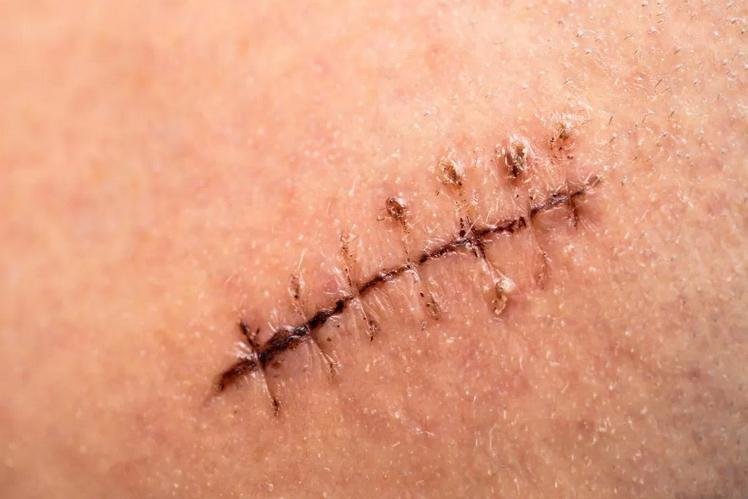
If you have recently had surgery, a dental procedure, or a wound stitched, you may be wondering how long it takes for dissolvable stitches to disappear. Some absorbable stitches begin breaking down within a few days, while others can remain in the body for several months.
The exact timeline depends on the material used, where the stitches were placed, the depth of the wound, and how your body heals. Some visible stitches may loosen or fall out within one or two weeks, even though deeper sutures take much longer to be fully absorbed.
In general, visible dissolvable stitches may start disappearing within 7–14 days, but complete absorption can take anywhere from a few weeks to several months, depending on the suture type.
This guide explains how long dissolvable stitches take to absorb, the timelines for common suture materials, what affects the process, and how to care for your wound safely. It also answers whether you can make sutures dissolve faster and when you should contact a healthcare professional.
How Long Do Dissolvable Stitches Take to Absorb?
Dissolvable stitches, also called absorbable sutures, are designed to break down naturally inside the body. Unlike non-dissolvable stitches, they usually do not need to be removed by a healthcare professional.
Most visible dissolvable stitches begin to loosen, break down, or fall out within 7–14 days. However, complete absorption of the suture material may take approximately 3 weeks to 8 months or longer, depending on the material.
For example:
- Fast-absorbing sutures may be absorbed in about 42 days.
- Vicryl sutures typically take around 56–70 days.
- Monocryl sutures can take approximately 91–119 days.
- PDS sutures may take around 182–238 days.
These are approximate material-specific absorption periods, not guarantees for every patient or wound. The surgeon chooses a suture based on how long the tissue needs support.
It is also important to understand that a stitch can lose its strength long before the material has completely disappeared. A thread that is still visible does not necessarily mean your wound is not healing.
How Long Does It Take for Dissolvable Sutures to Dissolve by Type?
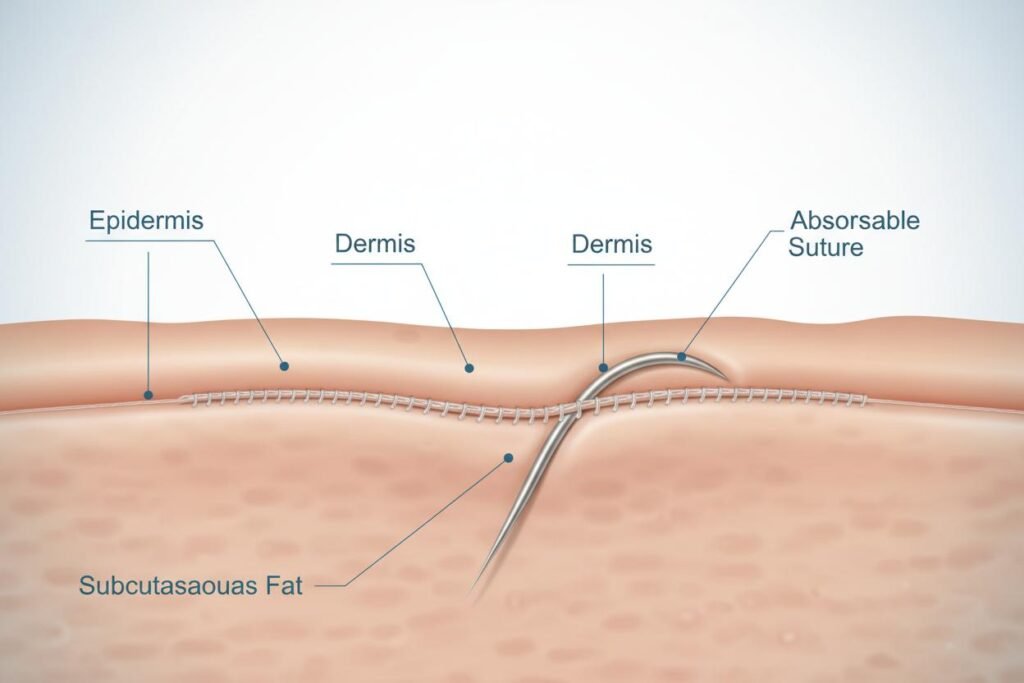
Different absorbable sutures are made from different materials. Some break down relatively quickly, while others are designed to provide support for deeper tissues over a longer period.
The following table shows approximate complete absorption times for commonly used materials.
| Suture type | Approximate complete absorption time |
|---|---|
| Fast-absorbing gut | Around 21–42 days, depending on formulation |
| Plain surgical gut | Around 70 days |
| Chromic surgical gut | Around 90–120 days |
| Vicryl Rapide | Around 42 days |
| Vicryl (polyglactin 910) | Around 56–70 days |
| Monocryl (poliglecaprone 25) | Around 91–119 days |
| PDS II (polydioxanone) | Around 182–238 days |
| Maxon (polyglyconate) | Around 180 days |
These figures are approximate absorption profiles reported for specific suture materials. Product formulations, suture size, tissue conditions, and clinical use can affect the actual timeline. Your surgeon or the product information for the specific suture provides the most relevant estimate.
1. Fast-Absorbing Gut Sutures
Fast-absorbing gut sutures are designed for wounds that need relatively short-term support. They are made from natural collagen material and are often used for selected superficial skin closures.
They may lose their useful strength quickly and are generally absorbed faster than many other suture materials. Depending on the formulation, complete absorption may take approximately 21–42 days.
2. Plain Gut Sutures
Plain gut sutures are natural absorbable stitches that break down through enzymatic processes in the body.
They may retain useful strength for a relatively short period, but the material can take approximately 70 days to be fully absorbed.
They are used in selected procedures where temporary tissue support is appropriate.
3. Chromic Gut Sutures
Chromic gut sutures are treated with chromium salts to slow their breakdown compared with plain gut.
Their complete absorption can take approximately 90–120 days. They may be used in certain oral, gynecological, and other surgical procedures.
4. Vicryl Rapide Sutures
Vicryl Rapide is a fast-absorbing synthetic suture made from polyglactin 910.
It is designed to lose its strength relatively quickly and is often used when only short-term support is needed, including selected superficial skin closures.
Its complete absorption is approximately 42 days, although visible surface threads may disappear sooner.
5. Vicryl Sutures
Standard Vicryl is a synthetic, braided absorbable suture commonly used for closing deeper layers of tissue.
It generally takes approximately 56–70 days to be completely absorbed. Its strength decreases before the material disappears, allowing the healing tissue to gradually take over the support role.
6. Monocryl Sutures
Monocryl is a synthetic, absorbable monofilament suture often used for subcuticular skin closure and selected soft-tissue procedures.
It typically takes around 91–119 days for complete absorption. The visible part of a wound closure may become less noticeable much earlier.
7. PDS Sutures
PDS II is a synthetic absorbable suture made from polydioxanone. It is designed to provide longer-lasting support than many other absorbable materials.
It can take approximately 182–238 days to be fully absorbed. It may be selected for deeper tissues or procedures where prolonged support is required.
Why do these timelines differ?
The chemical composition of each suture determines how it breaks down. Natural sutures such as surgical gut are degraded mainly through enzymatic processes, while many synthetic absorbable sutures break down through hydrolysis, a process involving water.
This is why two people can have dissolvable stitches that look similar but take very different amounts of time to disappear.
How Long Does It Take for the Stitches to Dissolve in Different Body Areas?
The location of your stitches can influence how quickly visible threads disappear, but the material and placement are often more important than the body area alone.
Here are some common examples.
Dissolvable Stitches in the Mouth
Dissolvable stitches are frequently used after dental procedures, including tooth extractions and some oral surgeries.
Many oral stitches begin loosening or falling out within 7–14 days. Some may remain longer, depending on the material and procedure.
It is important not to pull at a loose stitch with your fingers or tongue. Follow your dentist’s instructions about brushing, rinsing, eating, and cleaning the surgical area.
If a stitch comes out early and the wound opens, bleeds significantly, or becomes increasingly painful, contact your dental professional.
Dissolvable Stitches After Wisdom Tooth Removal
After wisdom tooth removal, stitches may be used to help close the gum tissue.
Many dissolvable stitches begin to loosen or disappear within one to two weeks, although some types can remain longer.
Your dentist or oral surgeon can tell you which type was used and when it should be expected to disappear.
Avoid trying to remove a stitch yourself, even if it feels loose.
Dissolvable Stitches on the Face
Some facial wounds are closed with fast-absorbing stitches, while others use sutures that need to be removed at a follow-up appointment.
Fast-absorbing surface stitches may start loosening within approximately 5–10 days, but the exact timing varies.
If a stitch remains visible after the expected period, ask your healthcare professional whether it needs assessment or removal. Do not pull it out yourself.
Dissolvable Stitches After Childbirth
Dissolvable stitches may be used after a vaginal birth to repair a perineal tear or episiotomy.
The visible stitches may begin to loosen or disappear over the first few weeks, while deeper material can take longer to absorb.
Follow your midwife’s or obstetric clinician’s instructions for hygiene, pain relief, and activity. Seek medical advice if pain worsens, the wound opens, or you notice unusual discharge, a bad smell, or fever.
Dissolvable Stitches After Surgery
Internal stitches used during operations may take several weeks or months to be completely absorbed.
For example, Vicryl may take around two months, while PDS can take six months or longer.
You may not be able to see these stitches because they are placed beneath the skin or inside the body. Your surgeon can explain which material was used and how long it is expected to last.
How Long Before Dissolving Stitches Dissolve Completely?
The phrase “dissolving stitches” can refer to two different stages:
- Loss of strength: The stitch gradually becomes weaker and provides less support to the wound.
- Complete absorption: The body breaks down and absorbs the remaining suture material.
These stages do not happen at the same time.
For instance, a particular suture may lose most of its strength within a few weeks but take several months to be fully absorbed.
This distinction explains why a stitch can remain visible even when the wound is healing normally.
If you can still see a small thread after the expected period, it does not automatically mean something is wrong. However, if it causes irritation, pain, or catches on clothing, ask your healthcare professional to examine it.
What Factors Affect How Long Dissolvable Stitches Take to Absorb?
There is no single timeline that applies to everyone. Several factors influence how long absorbable stitches remain in the body.
1. Type of Suture Material
This is one of the most important factors.
Fast-absorbing gut, Vicryl, Monocryl, and PDS are designed with different absorption profiles. A stitch intended for short-term skin support will not behave like one used to support deeper tissue for several months.
2. Location of the Wound
Stitches in the mouth, face, skin, and deeper surgical tissues may have different purposes and exposure to local conditions.
For example, a surface stitch may loosen or fall out relatively quickly, while an internal stitch remains in place much longer.
3. Depth and Size of the Wound
A deeper wound may require stronger or longer-lasting sutures to support the tissue while it heals.
The surgeon chooses the material and placement based on the wound’s characteristics, not simply on how quickly the thread should disappear.
4. Individual Healing Rate
Age, general health, circulation, nutrition, and certain medical conditions can affect wound healing.
However, the body’s healing rate does not directly determine the published absorption time of a particular suture material.
5. Infection or Wound Complications
Infection, inflammation, or wound separation can interfere with normal healing.
If the area becomes increasingly red, swollen, painful, or starts producing pus, contact your healthcare professional rather than trying to speed up stitch absorption.
6. Suture Size and Formulation
Different sizes and formulations of the same general material may have different performance characteristics.
For this reason, the exact product used by your surgeon matters when estimating how long the stitches will last.
How to Dissolve Sutures Faster: Is It Possible?
A common question after surgery is how to dissolve sutures faster, especially when a visible thread feels irritating or seems to be taking too long to disappear.
There is no safe, proven home method to make absorbable stitches dissolve faster. Their breakdown is primarily determined by the material and its designed absorption profile.
Trying to speed up the process can irritate the wound, damage healing tissue, or increase the risk of infection.
Instead of trying to accelerate absorption, focus on helping the wound heal properly.
What You Can Do Safely
- Follow your wound-care instructions: Use the cleaning and dressing routine recommended by your surgeon.
- Keep the area clean: Wash your hands before touching the area and clean the wound only as instructed.
- Avoid unnecessary friction: Wear comfortable clothing that does not rub against the stitches.
- Protect the wound: Avoid activities that stretch, pull, or put pressure on the healing area.
- Follow bathing instructions: Showering may be permitted after a specific period, but soaking and swimming may need to be avoided until the wound has healed.
- Attend follow-up appointments: Your healthcare professional can check whether the wound and stitches are healing as expected.
What You Should Not Do
Do not attempt to dissolve stitches using:
- Hydrogen peroxide or alcohol.
- Vinegar, lemon juice, or other acidic substances.
- Strong antiseptics unless prescribed.
- Heat, hot compresses, or prolonged soaking.
- Scrubbing, scratching, or forceful massage.
- Unprescribed creams or chemical products.
These approaches do not reliably accelerate absorption and may damage the healing tissue.
If a stitch is poking out, irritating your skin, or has remained longer than expected, contact your surgeon. A healthcare professional may be able to trim or remove an exposed loose end when it is safe to do so.
What Happens If Dissolvable Stitches Do Not Dissolve?
Sometimes a small piece of absorbable suture remains visible after the expected period.
This can happen because the stitch material takes longer to break down, a knot or end is exposed, or the wound is healing at a different rate than expected.
A small visible thread does not automatically mean that the wound is infected or that the stitches have failed.
However, contact your healthcare professional if:
- A stitch remains well beyond the timeframe you were given.
- The thread is painful or repeatedly catches on clothing.
- The skin around it becomes increasingly red or swollen.
- The area develops a tender lump or persistent irritation.
- The wound starts to open or separate.
- You notice discharge, pus, or an unpleasant smell.
Do not pull out a remaining stitch. Even if it appears loose, it may still be attached to deeper tissue.
Your healthcare professional can determine whether the remaining thread should be left alone, trimmed, or removed.
Signs That Your Dissolvable Stitches Are Healing Normally
The appearance of a healing wound changes over time. Some mild symptoms can be part of normal recovery.
Depending on the procedure, you may notice:
- Mild itching as the skin heals.
- Slight tenderness around the wound.
- A small amount of initial swelling.
- A stitch becoming loose or falling out.
- A scar that gradually changes in color and texture.
- Less discomfort as the wound heals.
These signs should generally improve rather than become progressively worse.
Remember that a wound can still be healing even when the stitch material is visible. The thread does not need to disappear completely before the skin starts recovering.
When Should You Contact a Doctor?
Contact your surgeon, doctor, dentist, or midwife if you notice signs that your wound may not be healing properly.
Watch for:
- Redness that spreads or becomes worse.
- Increasing pain or tenderness.
- Swelling or warmth around the wound.
- Yellow, green, or foul-smelling discharge.
- Fever or feeling generally unwell.
- Bleeding that does not stop with appropriate pressure.
- The wound edges separating or opening.
- A stitch becoming embedded or causing significant irritation.
Seek urgent medical attention if you have severe symptoms, rapidly spreading redness, significant bleeding, or feel seriously unwell.
If you have diabetes, a weakened immune system, poor circulation, or another condition that affects healing, follow your clinician’s advice closely and seek help promptly if the wound changes.
Frequently Asked Questions About Dissolvable Stitches
How long does it take dissolvable sutures to dissolve?
It depends on the material. Some absorbable sutures are designed to disappear in about 3–6 weeks, while others can take 2–8 months or longer. Visible surface stitches may loosen or fall out within 7–14 days.
How long does it take for dissolving sutures to dissolve?
Many visible dissolving stitches begin to disappear within one or two weeks. However, complete absorption of the thread may take several weeks or months, depending on the suture type.
How long does it take for the stitches to dissolve?
There is no single answer for every stitch. Fast-absorbing materials may be gone in around six weeks, while longer-lasting materials such as PDS can take approximately six to eight months to be fully absorbed.
How long for absorbable sutures to dissolve?
Absorbable sutures can take anywhere from approximately 3 weeks to 8 months or longer to be completely absorbed. The material, size, and location of the stitches determine the expected timeline.
How long do surgical stitches take to dissolve?
Surgical stitches can take a few weeks to several months to dissolve completely. Surface stitches may fall out sooner, while internal sutures are often designed to remain in place for longer to support deeper tissues.
How to dissolve sutures faster?
You cannot safely force absorbable stitches to dissolve faster at home. Follow your wound-care instructions, keep the area clean, avoid friction, and do not apply chemicals, alcohol, or peroxide to the stitches. If a stitch is irritating you, ask your healthcare professional whether it can be safely trimmed or removed.
How long before dissolving stitches dissolve completely?
Some dissolvable stitches begin loosening within 7–14 days, but complete absorption may take several weeks or months. Check the expected timeframe with the clinician who placed them.
How long for dissolvable stitches to disappear after surgery?
Many visible stitches start loosening within one or two weeks. Internal stitches can remain for much longer, depending on the material used and the tissue being repaired.
Can dissolvable stitches fall out before they dissolve?
Yes. Some superficial stitches may loosen or fall out as the wound heals. However, if the wound opens, bleeds, or becomes increasingly painful, contact your healthcare professional.
Is it normal to see a small thread after the wound has healed?
A small exposed thread or knot can sometimes remain after the surrounding skin has healed. Do not pull it out. A clinician can check whether it needs trimming or removal.
Do dissolvable stitches need to be removed?
Usually, no. They are designed to break down naturally. However, a healthcare professional may sometimes remove or trim a remaining exposed stitch if it is causing irritation or another problem.
Do dissolvable stitches dissolve faster in the mouth?
Not necessarily. Oral stitches may loosen and fall out within one or two weeks, but complete absorption depends on the material. Follow your dentist’s instructions and avoid pulling at loose threads.
Final Thoughts
Dissolvable stitches are designed to support healing and then break down naturally, but the time they take to disappear varies considerably.
Some visible stitches start loosening within 7–14 days, while complete absorption can take anywhere from a few weeks to several months. Materials such as Vicryl, Monocryl, and PDS have different absorption profiles, so knowing which type was used can help you understand what to expect.
If your stitches seem slow to dissolve, do not pull, scrub, or apply chemicals to them. There is no reliable home shortcut that safely speeds up the process. Keep the wound clean, follow your clinician’s instructions, and seek medical advice if you notice worsening pain, redness, swelling, discharge, fever, or wound separation.
The most important thing is not how quickly the stitches disappear, but whether the wound is healing safely and properly.
Medical disclaimer: This article is for educational purposes only and does not replace professional medical advice, diagnosis, or treatment. Always follow the specific wound-care instructions provided by your surgeon or healthcare professional.