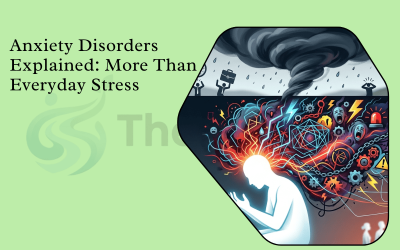
The clinical landscape of mental health is often clouded by a fundamental misunderstanding: the conflation of “stress” with “anxiety disorders.” In my decade of consulting within the healthcare and occupational health sectors, I have seen leadership teams dismiss chronic absenteeism as “just stress” when, in reality, they’re facing a clinical crisis. We have to draw a hard line here. Stress is a response to an external trigger; anxiety disorders are a persistent, internal physiological state that exists even when the trigger is gone[1].
The Diagnostic Barrier: Clinical Reality vs. “The Blues”
To understand the gap, we must look at the strict criteria set by the DSM-5 and confirmed by StatPearls (NIH). Clinical anxiety is not a bad week at the office; it is a sustained impairment [2]. Key diagnostic markers include:
- Symptoms persist for six months.
- Functioning in daily life is impaired.
- Worry is difficult to control.
- Physical fatigue is common.
- Muscle tension is frequently present.
- Sleep disturbances are standard.
- Restlessness occurs almost daily.
As Fadjrianah and Munir (2021) state in StatPearls, “Generalized anxiety disorder is characterized by excessive, persistent, and unrealistic worry about everyday things” [2]. This isn’t the nerves you feel before a board meeting. It’s the physical inability to turn off the alarm system in your brain when you’re lying in bed on a Saturday.
The Biology of Uncertainty
One of the most compelling frameworks I’ve utilized is the “Uncertainty Learning” model. Research in Cognitive, Affective, & Behavioral Neuroscience suggests that the anxious brain is malfunctioning in how it learns about safety [3].
- Uncertainty triggers a threat response.
- Safety signals are ignored.
- Avoidance behaviors become reinforced.
- Beliefs about danger don’t update.
- The brain anticipates the worst.
- Sensory processing becomes hypersensitive.
“Anxiety can be viewed as a disorder of uncertainty, where individuals are unable to update their beliefs about the environment in the face of changing safety signals,” notes Brown et al. (2023) [3]. It’s a hardware issue, not a software glitch.
Why It’s Not Just “Work Pressure”
We don’t live in a world where stress is avoidable, but we do live in one where anxiety is manageable if identified. Professionals often use the terms interchangeably. The neurological pathways of stress and anxiety are distinct. Stress is the “fight or flight” response working as intended; an anxiety disorder is that same system getting stuck in the “on” position [1].
“Generalized anxiety disorder is not just a case of ‘nerves’; it is a serious medical condition that can affect every aspect of a person’s life.”
— Bandelow et al. (2017), Dialogues in Clinical Neuroscience [4]
If we don’t recognize the difference, we cannot provide the right support. You can’t “yoga” your way out of a clinical disorder any more than you can “meditate” away a broken leg.
Comparison: Stress vs. Clinical Anxiety Disorder
| Feature | Everyday Stress | Anxiety Disorder (GAD) |
| Trigger | Identifiable external pressure. | Often internal or unknown. |
| Duration | Ends when trigger resolves. | Lasts six months or more[2]. |
| Intensity | Proportional to the event. | Disproportionate to the situation. |
| Physical Impact | Temporary muscle tension. | Chronic fatigue and insomnia [4]. |
| Resolution | Solved through time management. | Requires clinical intervention. |
| Cognitive Shift | Focus on the problem. | Focus on catastrophic “what-ifs.” |
A Look at the Kids (It’s Different for Them)
In my work with educational institutions, I’ve seen that anxiety in children is frequently mislabeled as “bad behavior.” The Pediatric Anxiety 2025 Echo Report highlights that kids don’t always have the vocabulary to say, “I am anxious.” Instead, they act out.
- Freezing up in social situations.
- Tantrums over small changes.
- Frequent stomachaches or headaches.
- Avoiding school or playdates.
- Excessive seeking of reassurance.
- Difficulty concentrating on tasks.
Global Trends and the Treatment Gap
The Wellcome Trust’s GALENOS Project indicates that student mental health and the fallout from global crises are becoming permanent fixtures in the research landscape [5]. We are seeing a massive shift toward digital health.
- Digital Tools: Internet-based CBT (iCBT) shows great promise in breaking down barriers to access [6].
- Effectiveness: “The efficacy of internet-based interventions for generalized anxiety disorder has been established through numerous controlled trials,” writes Kanuri et al. (2015) [6].
“The efficacy of internet-based interventions for generalized anxiety disorder has been established through numerous controlled trials,” writes Kanuri et al. (2015) in JMIR Research Protocols. For organizations with global teams, iCBT (Internet-delivered Cognitive Behavioral Therapy) is no longer a luxury; it is a necessity for maintaining a healthy workforce.
The Evolution of Fear
Evolutionarily, anxiety was a survival trait. However, modern triggers (unread emails) are non-lethal, yet our biology hasn’t caught up [7]. Halaj et al. (2024) argue that metacognition—how we think about our thoughts—determines the severity of the disorder [7]. If you can view anxiety as a biological misfire rather than a “truth,” management becomes possible.
Moving Toward a Solution
We have to stop treating mental health like a “nice-to-have” HR benefit. It’s a core operational risk. First-line treatments like Cognitive Behavioral Therapy (CBT) and SSRIs remain the gold standards [2][4]. If 25% of your workforce is struggling with a clinical disorder that impairs their cognitive function, that is a bottom-line issue.
“The primary goal of treating anxiety is to help the patient return to their previous level of functioning.”
— Fadjrianah & Munir (2021), StatPearls
First-line treatments are well-documented. Cognitive Behavioral Therapy (CBT) and SSRIs are the gold standards. We do not need to reinvent the wheel; we just need to use the wheels we already have.
Practical Steps for Implementation
If you’re in a position of leadership or consultancy, here is what you should be looking for.
- Audit your mental health benefits.
- Train managers on clinical signs.
- Promote psychological safety daily.
- Normalize conversations about therapy.
- Reduce the “accommodation” of avoidance.
- Measure outcomes, not just usage [5].
Wrapping It Up
The data is clear. The biology is proven. The treatment is available. The only thing missing in many sectors is the willingness to treat anxiety disorders with the same clinical rigor we apply to physical health. You wouldn’t tell someone with a heart condition to “just breathe.” Don’t do it to someone with an anxiety disorder either.
Resource Links
- [1] American Psychological Association. (2022). What’s the difference between stress and anxiety? https://www.apa.org/topics/stress/anxiety-difference
- [2] Munir, S., & Fadjrianah, S. (2021). Generalized Anxiety Disorder. StatPearls Publishing. https://www.ncbi.nlm.nih.gov/books/NBK441870/
- Cited by: 11
- [3] Brown, L. S., et al. (2023). Anxiety as a disorder of uncertainty: Implications for understanding maladaptive anxiety, anxious avoidance, and exposure therapy. Cognitive, Affective, & Behavioral Neuroscience, 23(4), 1–25. https://doi.org/10.3758/s13415-023-01073-9
- [4] Bandelow, B., Michaelis, S., & Wedekind, D. (2017). Treatment of Anxiety Disorders. Dialogues in Clinical Neuroscience, 19(2), 93–107. https://doi.org/10.31887/DCNS.2017.19.2/bbandelow
- [5] Wellcome Trust. (2024). The GALENOS Project: Global Alliance for Living Evidence on Mental Health. Wellcome Open Research. https://wellcomeopenresearch.org/galenos
- [6] Kanuri, N., et al. (2015). The Feasibility, Acceptability, and Efficacy of Delivering Internet-Based Self-Help for Generalized Anxiety Disorder. JMIR Research Protocols, 4(4). https://doi.org/10.2196/resprot.4901
- [7] Halaj, A., Konstantakopoulos, G., Ghaemi, N. S., & David, A. S. (2024). Anxiety Disorders: The Relationship between Insight and Metacognition. Psychopathology, 57(5), 434–443. https://doi.org/10.1159/000538096


Is social anxiety different from shyness?
Yes, social anxiety involves a clinical impairment and intense fear of judgment.
What is high-functioning anxiety?
It describes individuals who appear successful while experiencing internal clinical anxiety.
How long does a typical panic attack last?
Most panic attacks peak within 10 minutes and subside shortly after.
Does caffeine make anxiety disorders worse?
Caffeine is a stimulant that can trigger or exacerbate physiological anxiety symptoms.
Can diet affect anxiety levels?
High-sugar diets and processed foods are linked to increased anxiety symptoms.
Is anxiety hereditary?
Genetics play a significant role in a person's predisposition to anxiety disorders.
What is the "3-3-3 rule" for anxiety?
It involves naming three things you see, hear, and move to ground yourself.
Can exercise replace anxiety medication?
Exercise is a powerful supplement but usually doesn't replace clinical treatment.