Gout in the Heel: Spotting the Symptoms and Dancing Around Plantar Fasciitis
Gout or plantar fasciitis – which beast is nipping at your heel? Diagnosing these two notorious heel pain producers requires a discerning eye and a touch of good fortune. Who knew the soles of your feet could inspire such complexity? This guide breaks down the differences, borrowing wisdom from trusted sources to arm healthcare providers, coding virtuosos, billing wizards, and curiosity-driven civilians.
So, what’s gout in the heel all about?
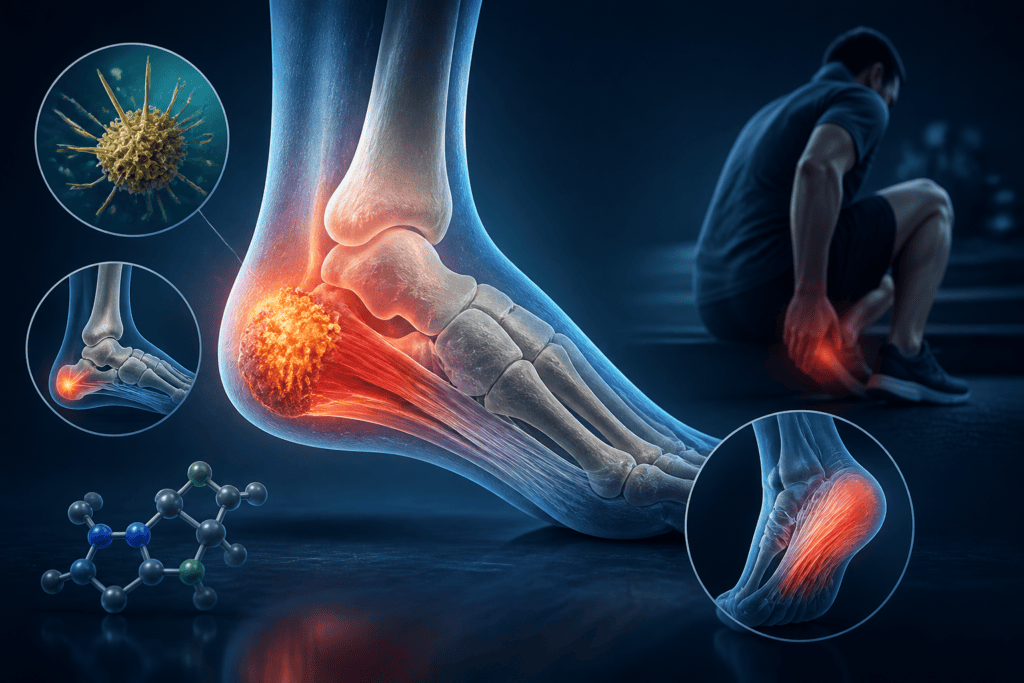
Picture this: you’re jolted awake by a heel so fiery it could double as a nightlight. Gout struts into your heel with sudden, fierce pain, redness, and swelling. Heat’s in the mix too. Monosodium urate crystals are the villains here, depositing themselves in your heel joint or nearby tissues. Patients often lament that this agony ambushes them in the dead of night, intensifying to the brink of unbearable. Gout flares might bring along fever and a mean case of malaise, making plantar fasciitis look like a walk in the park by comparison.
Heel pain’s doppelgängers: Gout vs. Plantar Fasciitis
Get your detective cap on. Gout hammers the heel with uric acid crystal-induced pain, swift and severe. Meanwhile, plantar fasciitis creeps up with a slow burn due to overuse, specifically after you’ve been lounging like a cat or taking those notorious first morning steps. Plantar fasciitis pain loves a good walk-off, easing with movement, whereas gout grows nastier when pressure joins the party.
Why does gout get all heel-happy?
Gout can haunt any joint, but when it zeroes in on your heel, the subtalar joint or Achilles tendon are the usual suspects. Contributing to this crystal jamboree? A penchant for purine-rich diets, obesity, kidney woes, and certain meds. The heel’s got a heavy lifting gig, making it prime real estate for crystal crashing and inflammatory antics. Lucky you.
Cracking the case: Diagnosing gout in the heel
Diagnosis demands a mix of clinical sleuthing, lab tests, and possibly a round of imaging. A joint aspiration might reveal those pesky urate crystals. Blood tests check serum uric acid levels, but don’t bet the farm on them—fluctuations abound. Imaging aids like X-rays or ultrasounds might showcase joint erosion or tophi, though typically in more experienced cases.
Diagnosis dilemmas: Where do things go awry?
Misdiagnosis runs rampant when trying to untangle gout from other heel pain culprits like plantar fasciitis or Achilles tendinitis. Relying too heavily on serum uric acid levels? That can steer you wrong, as they might just behave during a flare. A detailed patient history and physical exam, focused on the acute symptom choreography, is the real hero here.
The grand treatment plan for heel gout
Think short-term relief and long-haul management. Acute attacks get a dose of NSAIDs, colchicine, or corticosteroids, easing inflammation and pain. Long-term, it’s all about lifestyle changes and medications like allopurinol or febuxostat to keep those uric acid levels in check. Slashing purine intake is on the menu too, fending off future flare-ups.
Gout vs. Plantar Fasciitis: A treatment tale
Treating gout focuses on deflating uric acid and quelling inflammation. Plantar fasciitis, however, calls for physical therapy’s gentle touch, orthotic alliances, and activity tweaks. Exercises, night splints, and anti-inflammatory meds are staples in plantar fasciitis care. Your diagnosis better be spot-on to avoid a treatment misfire.
Decoding the mystery of billing for gout and plantar fasciitis
Code correctly or face the wrath of denied claims! Gout lands under ICD-10 code M10.071 for gout in the ankle and foot, while plantar fasciitis takes a bow as M72.2. Documentation must spotlight diagnosis, treatment plans, and any procedures performed. Slip-ups in classification can unleash billing chaos.
Documentation: The unsung hero of billing accuracy
Thorough documentation is your shield against billing nightmares. Capture patient history, symptom chronicles, diagnostic exploits, treatment blueprints, and follow-up care with exactitude. Specificity in documentation is your secret weapon, ensuring the coding aligns and the claims fly through without a hitch.
| Situation | Recommended Approach | Common Risk | Documentation Needed |
|---|---|---|---|
| Suspected Gout Attack | Perform joint aspiration and serum uric acid test | Misdiagnosis due to normal uric acid levels | Patient history, test results, treatment plan |
| Recurring Heel Pain | Consider differential diagnoses including plantar fasciitis | Overlooking biomechanical causes | Detailed symptom log, imaging results |
| Billing and Coding | Use specific ICD-10 codes for each condition | Incorrect code application | Clear documentation of diagnosis and treatment |
Disclaimer: This content is published strictly for educational and general informational purposes. It does not constitute professional medical, legal, financial, or technical advice. Always consult a certified specialist or licensed professional regarding your specific situation before making decisions.