Six-Year Molars: When They Erupt, Symptoms, and Dental Care
Let’s talk about six-year molars. They’re important for kids’ dental health and knowing about them helps dentists, healthcare providers, and parents. We’ll cover when these first permanent molars usually appear, what signs to look for, and how to care for them properly.
When Do Six-Year Molars Erupt?
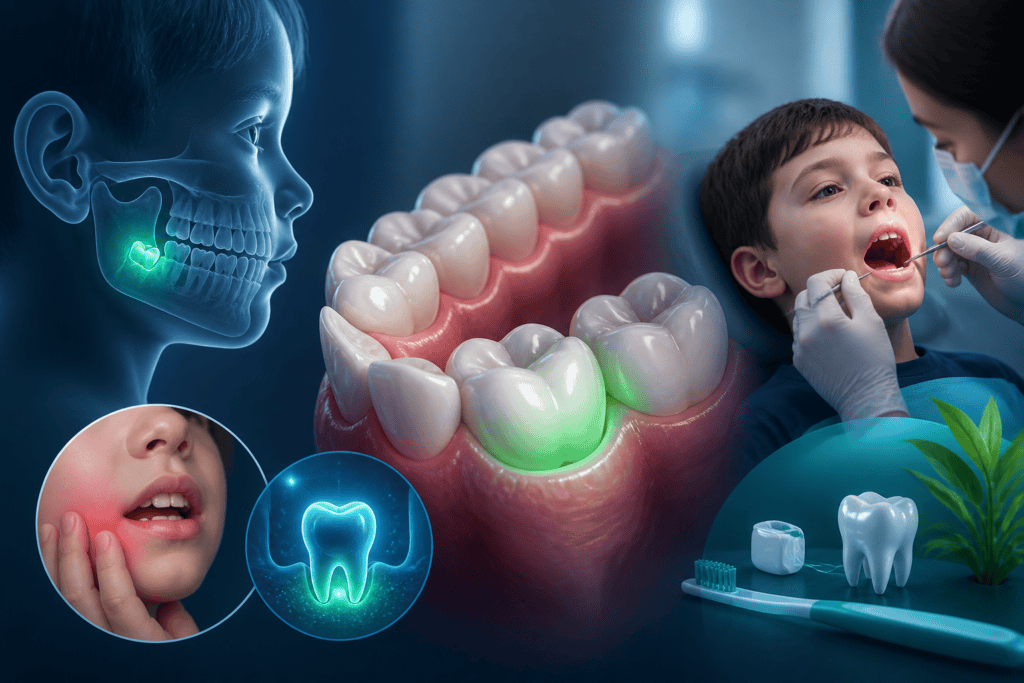
Six-year molars, also called first permanent molars, usually start coming in between ages 5 and 7. But, it can differ from child to child. If they’re super early or quite late, it might be a good idea to check with a dentist to make sure everything’s alright.
Why Does Timing Vary?
- Genetic factors and family history
- What the child eats and their nutrition
- Their overall health and any conditions they might have
Spotting Symptoms of Six-Year Molars
When these molars start to come in, kids might show some symptoms. Knowing these can help you ease their discomfort and avoid trouble later on.
What Symptoms to Look Out For?
- More drooling than usual
- Gums getting a bit swollen
- Certain toys getting chewed on more
- Occasional mild fever
- Some irritability or fussiness
These symptoms are generally mild, but if there’s a lot of pain or swelling, it’s wise to see a dentist. It could be something like an infection.
Key Dental Care for Six-Year Molars
Good dental care is key when these molars come in. It keeps them healthy and free from cavities. Practicing good oral hygiene can make a big difference.
Tips for Good Dental Hygiene
- Brush teeth twice a day for two minutes each time
- Use toothpaste with fluoride to strengthen teeth
- Floss daily to clean between teeth
- Rinse with mouthwash that kills germs
- Visit the dentist every six months
What Dentists Can Do
Your dentist might suggest sealants for these molars. Sealants are like a protective layer that keeps food from getting stuck in the teeth’s grooves. They help prevent cavities and are budget-friendly too.
Comparing Six-Year Molars to Other Teeth
| Teeth Type | Age of Eruption | Symptoms | Care Recommendations |
|---|---|---|---|
| Six-Year Molars | 5 to 7 years | Swelling, drooling, mild fever | Brush, floss, sealants |
| Incisors | 6 to 8 years | Mild discomfort, chewing objects | Regular brushing, dental visits |
| Canines | 9 to 12 years | Minimal symptoms | Routine oral hygiene |
Challenges and Solutions
There are some hurdles when six-year molars come in. Tackling them early can make everything easier for kids and their caregivers.
How to Handle Discomfort
- Use cold compresses to ease pain
- Provide safe teething rings for them to chew
- Consider giving child-safe pain medicine, if needed
Keeping Cavities Away
- Cut down on sugary snacks and beverages
- Encourage drinking water between meals
- Make sure to have regular dental cleanings
“Preventive care is the cornerstone of pediatric dentistry,” says Dr. Lisa Harper, DDS, a pediatric dental expert. “Early education and intervention can significantly impact a child’s oral health trajectory.”
Wrapping Up
Knowing about six-year molars and how to care for them matters for keeping your child’s mouth healthy. By noticing signs early and taking action with good care habits, you help ensure a positive dental experience.
FAQs on Six-Year Molars
- What age do six-year molars erupt? They usually appear between ages 5 and 7.
- Are six-year molars painful? There might be some mild discomfort.
- How to relieve molar pain? Cold compresses or teething rings can help.
- Do six-year molars need sealants? Sealants can be a good idea to protect them.
- Can molars cause fever? Yes, a low-grade fever can sometimes occur.
References/Resources
- American Dental Association. “First Permanent Molars.” ADA.org.
- Harper, Lisa. “Preventive Pediatric Dentistry.” Journal of Dental Health, 2022.
- National Institute of Dental and Craniofacial Research. “Children’s Oral Health.” NIDCR.nih.gov.
- Centers for Disease Control and Prevention. “Dental Sealants.” CDC.gov.
- World Health Organization. “Oral Health Facts.” WHO.int.
Disclaimer: This content is published strictly for educational and general informational purposes. It does not constitute professional medical, legal, financial, or technical advice. Always consult a certified specialist or licensed professional regarding your specific situation before making decisions.