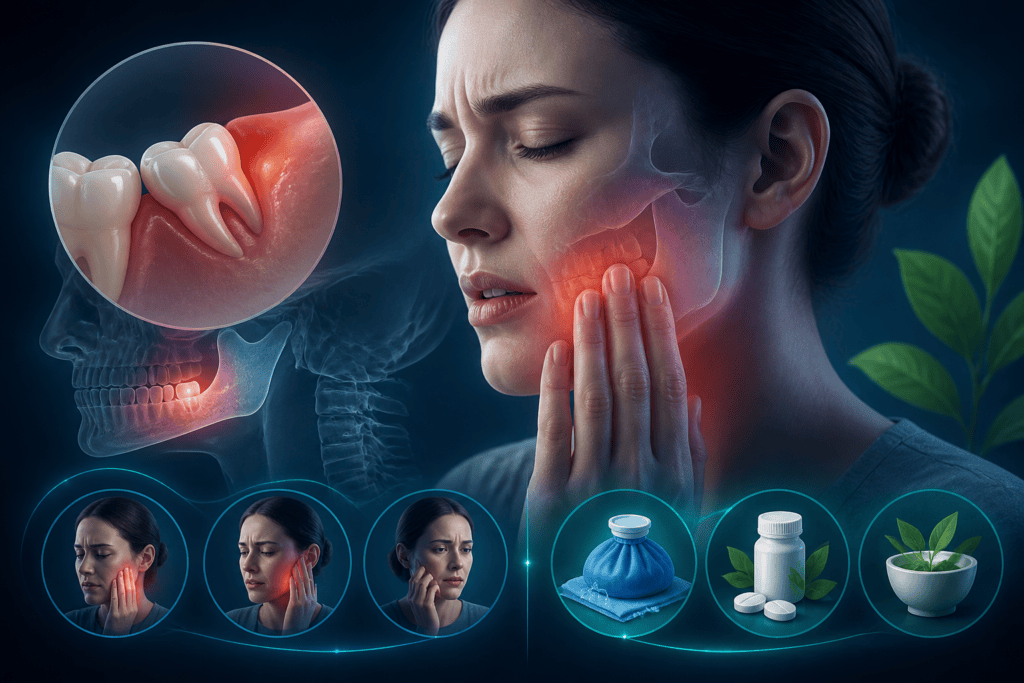
Wisdom teeth, or third molars, usually make their appearance when we’re in our late teens or early twenties. But as they try to settle in, they can sometimes cause problems, like jaw pain. Let’s explore how wisdom teeth might lead to jaw pain, what symptoms to look out for, and what you can do about it. But don’t worry, we’ll keep it simple and practical.
The Core Issue
So, can wisdom teeth actually cause jaw pain? The answer is yes, they can. The challenge for both you and your dentist is to recognize the symptoms, figure out why they’re happening, and then find the best way to relieve them. Even though wisdom teeth are a normal part of our mouths, they can cause trouble, mainly because there might not be enough room for them, or they might not line up just right.
Jaw pain from wisdom teeth can come from a few different problems, like if the tooth is stuck (that’s called impaction), gets infected, or pushes on other teeth. This can really mess with your daily life, so it’s important to sort out what’s wrong and how to fix it.
What Research and Regulations Actually Say
There’s been a lot of study on wisdom teeth issues. The American Dental Association (ADA) says wisdom teeth often get impacted, which can cause jaw pain, swelling, and infections. Teeth get impacted when there’s not enough space for them to come in or grow right.
The National Institute of Dental and Craniofacial Research (NIDCR) points out that wisdom teeth can push on nearby teeth, causing discomfort and even misalignment. The Centers for Disease Control and Prevention (CDC) adds that if you don’t clean partially erupted wisdom teeth well, you’re more likely to get an infection, which can also lead to jaw pain.
When it comes to rules, getting a good dental check-up and X-rays is key. These help see how the wisdom teeth are positioned and if they’re healthy, which helps decide if they need to come out.
| Question | Evidence / Guidance | Practical Meaning | Source |
|---|---|---|---|
| Can wisdom teeth cause jaw pain? | Yes, due to impaction, infection, and pressure on other teeth. | Identifying cause is critical for treatment planning. | ADA, NIDCR, CDC |
| What are common symptoms? | Jaw pain, swelling, difficulty opening mouth, infection. | Symptoms guide diagnostic and treatment strategies. | Professional dental guidelines |
| What relief options exist? | Analgesics, antibiotics, surgery (extraction). | Multiple relief options tailored to symptom severity and cause. | Clinical practice guidelines |
Where Practice Gets Complicated
Managing jaw pain from wisdom teeth isn’t always simple, mainly because everyone’s mouth is a little different. For dentists, deciding if a tooth should be pulled out depends on many things, like your age, health, and where the tooth is. Plus, insurance and coding rules can sway the decision.
Insurance companies have different rules about needing wisdom teeth removal, which affects how these procedures are noted and billed. On top of that, if there are other mouth issues like temporomandibular joint (TMJ) disorders, it can get tricky for dentists to figure out what’s what.
Practical Application
When you go to the dentist with jaw pain that might be from wisdom teeth, they should check everything carefully. This means they’ll ask about your medical history, look around your mouth, and take some X-rays. From there, they can come up with a treatment plan that fits your needs, whether that’s pain meds or surgery if needed.
For the folks handling coding and billing, knowing all the details of documenting and what insurance companies want is key to getting everything paid for correctly. They need to know the specific codes for oral surgeries and how insurance plans handle wisdom teeth extractions.
If you’re someone looking for information, knowing what your options and possible costs are can really help. Talking openly with your dental team helps set realistic expectations and get the best results.
Key Takeaways
- Wisdom teeth can indeed cause jaw pain, mainly due to impaction, infection, or pressure on nearby teeth.
- Getting a proper diagnosis and assessment is key to deciding the right treatment, which might include removing the tooth or treating it another way.
- Healthcare providers, coders, and billing teams have to navigate complex rules and insurance requirements for effective and correct patient care.
- Patients should actively discuss any symptoms and treatment choices with their dental care providers to make informed decisions.
Disclaimer: This content is published strictly for educational and general informational purposes. It does not constitute professional medical, legal, financial, or technical advice. Always consult a certified specialist or licensed professional regarding your specific situation before making decisions.