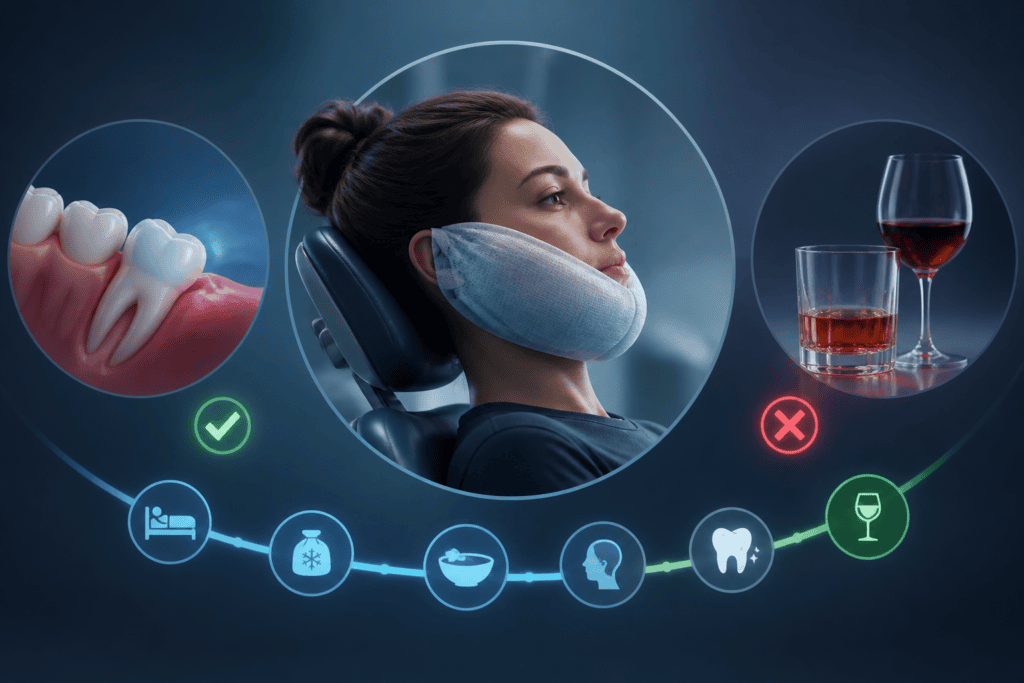
Ah, the perennial question: “When can you drink alcohol after wisdom teeth removal?” A query as timeless as the procedure itself. Because surely, nothing says post-surgery like a celebratory booze binge. Alas, understanding the safe timeline for indulging in a tipple is crucial for a seamless recovery and avoiding health hiccups. Let’s navigate this frothy conundrum.
Dissecting Post-Op Recovery
Post-wisdom teeth extraction, the name of the game is healing. The initial recovery phase is when you’re playing defense: managing pain, tackling swelling, and warding off infection. Alcohol, that notorious disruptor, needs to be approached with care.
The All-Important First 48 Hours
The first 48 hours post-surgery? Absolutely vital. Blood clots are forming at the extraction sites—those little life-savers essential for healing. Alcohol here? A recipe for disaster, possibly leading to dry sockets. Ouch.
- No alcohol. Period.
- Drink water like it’s going out of style.
- Pain meds are your friend—stick to the plan.
- Eat soft foods your grandma would approve of.
Alcohol Meets Medication: A Match Not Made in Heaven
Post-surgery, you’re likely on painkillers like ibuprofen or something stronger. Mixing these with alcohol? Not the cocktail you’re looking for. Be aware of these interactions or face some rather unpleasant side effects.
- Drowsiness dialed up to eleven
- Liver sending out an SOS
- Antibiotics not doing their job
The Alcohol Timeline: When Is It Safe?
General wisdom suggests waiting at least 72 hours before diving back into the bottle. But, as with many things in life, personal recovery and your medication regimen could alter this timeline. A chat with your dental god (or surgeon) is advisable for tailored advice.
Resume Drinking: A Timeline or a Fantasy?
| Activity | Recommended Waiting Period |
|---|---|
| Drinking Alcohol | 3-7 days |
| Smoking | 72 hours |
| Strenuous Exercise | 3-5 days |
| Returning to Work | 1-2 days |
Avoiding Recovery Blunders
Veer off the healing path, and you’re shackled to complications. Here’s a list of common pitfalls, and some sage advice to skirt around them:
- Breaking dietary guidelines—stick to baby food
- Forgetting oral hygiene—saltwater rinses, your new ritual
- Messing up blood clots—say no to straws
- Ignoring pain control—medication is not optional
Wisdom from the Experts
“The key to a speedy recovery post-wisdom teeth removal is adhering to your dentist’s guidelines, especially regarding activities like drinking alcohol,” opines Dr. Jamie Lewis, DDS, a certified oral surgeon [1].
Dr. Lewis doesn’t mince words, advising against any activities that might meddle with your recovery, especially in the pivotal first week.
Nailing Compliance with Recovery Protocols
Adhering to post-op instructions is paramount for both patients and those guiding them to the light. Recognizing the no-go zones, like certain substances and activities, is key to dodging complications.
- Keep tabs on patients following the rules
- Highlight the risks of preemptive drinking
- Offer clear, written post-op dos and don’ts
The Buzzing FAQs
- Can I drink alcohol 24 hours after surgery? No, refrain from it.
- What happens if I drink alcohol too soon? Risk of dry sockets looms.
- Will alcohol interact with my medication? Indeed, it can trigger adverse effects.
- How long until I can drink wine? Hold off for at least 72 hours.
- Is there a safe alcohol amount post-surgery? Chat with your dentist.
Disclaimer: This content is published strictly for educational and general informational purposes. It does not constitute professional medical, legal, financial, or technical advice. Always consult a certified specialist or licensed professional regarding your specific situation before making decisions.