How to Deal with a Wobbly Tooth in Adults: Causes and Dental Solutions
Discovering a loose tooth as an adult can be quite alarming, leaving you wondering about your dental future. While it’s something children often experience, for grown-ups, it might point to deeper issues needing swift action. This piece dives into the various causes behind this unsettling symptom and lays out solid treatment options to bring back your smile’s stability.
A Closer Look at Why Adult Teeth Get Loose
Our adult chompers are built to last a lifetime, staying put firmly. But when one starts to wiggle, it’s vital to figure out what might be going on. Here are the usual suspects:
Gum Disease
Periodontal disease, or as many know it, gum disease, tops the list of causes for jiggly teeth in adults. The CDC drops a jaw-dropping stat: about 47% of adults 30 and older have some form of it. It’s all about inflamed and infected gums, which can wear away the structures keeping our teeth snugly in place.
Accidents and Trauma
Ever taken a tumble or got hit while playing sports? Such impacts can unseat your teeth. A sudden shock can mess up the ligaments and bones doing the heavy lifting, so a quick dental check is a must.
Teeth Grinding (Bruxism)
Some folks grind their teeth so much they could sharpen pencils with them. Known as bruxism, this pesky habit applies tremendous pressure, eventually loosening teeth and harming nearby tissues and bones.
Bone Loss (Osteoporosis)
Osteoporosis doesn’t just weaken bones, it can also make your jawbone less supportive. According to the NIH, this condition can leave teeth without the stable bedrock they need.
Other Health Conditions
Diseases like diabetes and some autoimmune disorders can worsen gum disease and tooth mobility. These conditions often mess with blood flow and immune system responses, complicating oral health.
Diagnosing What’s Going On with That Loose Tooth
Before jumping into treatment, a trusty diagnosis is key. Dentists use a variety of tools to get the full picture of tooth mobility:
- Clinical Examination: A detailed look inside the mouth, with a good old-fashioned gum poke.
- X-Ray Analysis: Essential for spotting bone loss or any hidden damage.
- Periodontal Probing: Measuring how deep those gum pockets are to gauge periodontal disease severity.
Getting a Handle on Loose Teeth: Dental Treatments
The right fix depends on what’s causing the wobble. Check out these main treatments:
Non-Surgical Gum Treatment
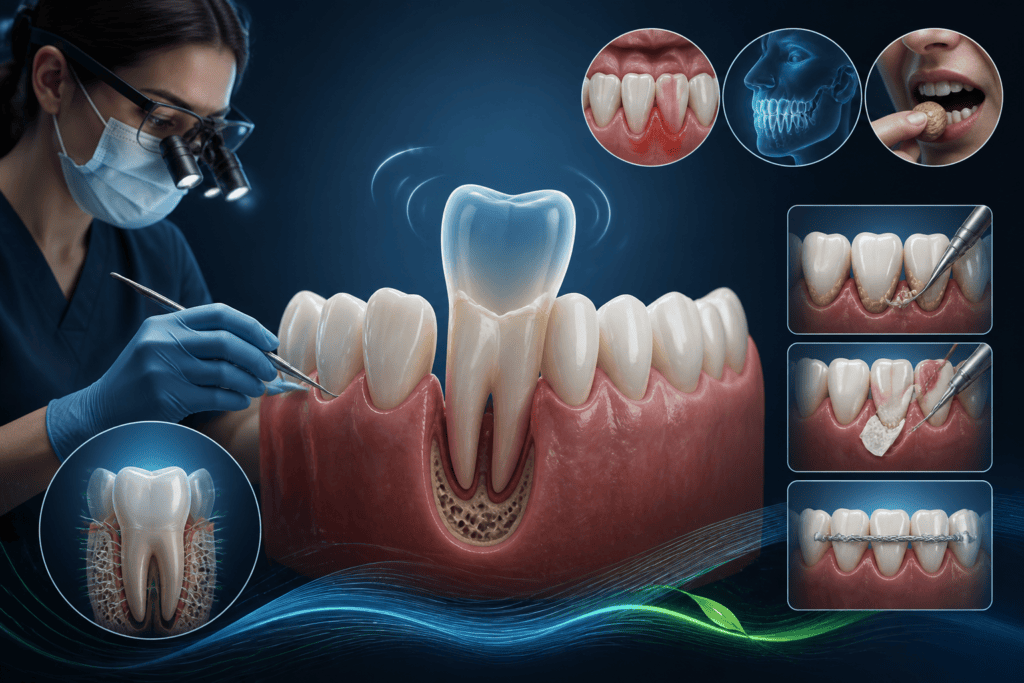
For gum disease, non-surgical periodontal therapy is usually step one. This involves scaling and root planing to banish plaque and tartar, with regular touch-ups to keep things from slipping back. The ADA stresses how crucial professional cleanings are, along with keeping up with oral care at home.
Surgical Measures
When gum disease is advanced, surgery might be in the cards:
- Flap Surgery: This involves lifting the gums to clear out tartar and cut down on pocket depth.
- Grafting: Bone and tissue grafts work to rebuild lost structures, keeping teeth from wandering.
Tooth Splinting
Dental splinting acts like a temporary anchor, tying wobbly teeth to their stable neighbors. Depending on the issue, it can be short-term or permanent.
Adjusting Your Bite
If bruxism is the issue, adjusting your bite or using night guards can ease the stress on your teeth. This helps prevent further movement and damage.
Taking on Health Issues
Addressing health conditions like osteoporosis or diabetes is a must. Working closely with healthcare providers can help manage these issues, minimizing their impact on your dental well-being.
Prevention and Long-lasting Care
In the realm of dentistry, prevention truly is the best medicine:
- Routine Check-ups: Regular visits help catch problems early and keep them from escalating.
- Top-Notch Oral Care: Brush twice a day, floss, and swish with antiseptic mouthwash to fight off plaque and tartar.
- Smart Lifestyle Choices: Eating well and steering clear of tobacco can dramatically lower the risk of gum disease.
An Overview of Treatment Choices: Weighing the Options
| Treatment | Use Case | Benefits | Drawbacks |
|---|---|---|---|
| Non-Surgical Therapy | For gum disease | Non-invasive and effective | Needs ongoing care |
| Surgical Intervention | Advanced gum disease | Restores stability | Invasive, with recovery time |
| Splinting | Due to injury | Quick stabilization | Might not fix the underlying problem |
| Occlusal Adjustment | For bruxism | Prevents further harm | Won’t cure bruxism |
Wrapping It Up
Don’t brush off a loose tooth—it’s critical to figure out what’s up and get the right dental care pronto. By pairing diagnostic techniques with treatment, dental pros can tackle the problem head-on, helping folks maintain a happy, healthy smile.
FAQs
- What if I find a loose tooth?
Don’t delay—see a dentist ASAP to find out the cause and best treatment. - Can a loose tooth tighten up again?
Sometimes, with the right dental care, it can regain stability. - How can I ward off loose teeth?
Stay on top of oral hygiene, keep up with dental visits, and manage overall health conditions. - Is a loose tooth always due to gum disease?
Nope, it could also be from an injury, bruxism, or other health issues.
Disclaimer: This content is published strictly for educational and general informational purposes. It does not constitute professional medical, legal, financial, or technical advice. Always consult a certified specialist or licensed professional regarding your specific situation before making decisions.