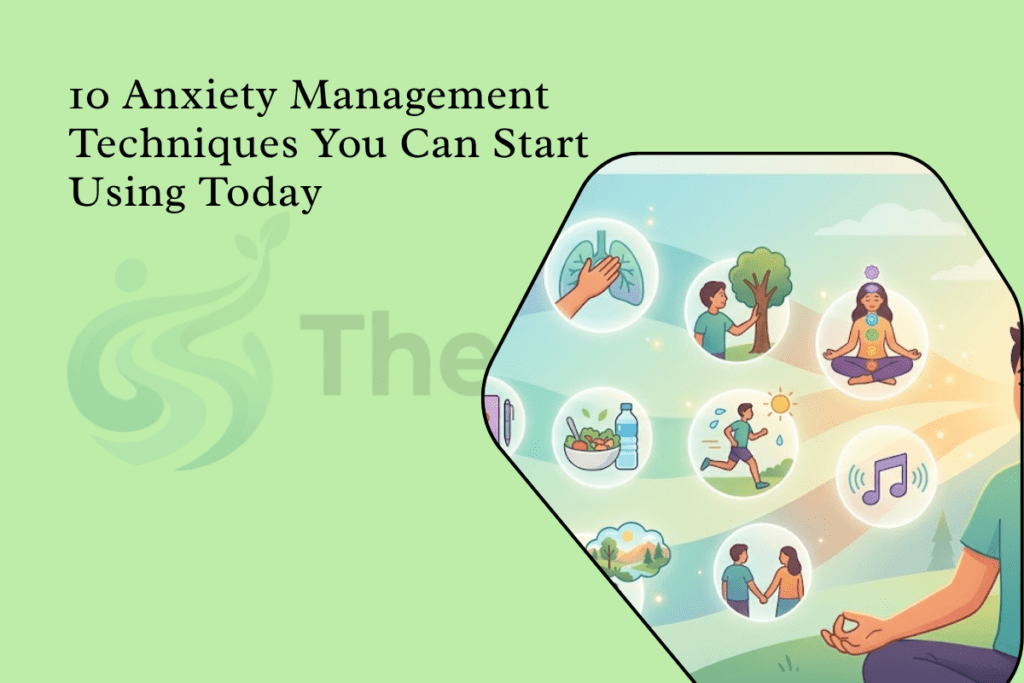
Managing clinical or situational anxiety requires practical tactics that yield measurable results. In the mental health space, clinicians rely on evidence-based protocols to help clients lower acute stress. While many people immediately ask, “what is a good medication for anxiety?” long-term recovery depends heavily on behavioral tools. Understanding options for prescription drugs for anti anxiety can help you make informed choices with your doctor.
This guide outlines ten concrete, boots-on-the-ground techniques to manage anxiety today, backed by clinical research.
1. Implement Micro-Exposure Protocols
Avoidance feeds anxiety. When you run away from a stressor, your brain assumes the danger was real. Micro-exposure forces you to confront minor stressors in structured, brief windows.
- Identify your specific anxiety triggers.
- Rank them from mild to severe.
- Expose yourself to small triggers daily.
- Do not leave during initial panic.
- Allow your heart rate to drop.
- Repeat until the distress minimizes completely.
- Document your distress scores every time.
According to research published in Dialogues in Clinical Neuroscience, systematic exposure is a foundational pillar of cognitive behavioral therapy [1]. Facing your fears directly rewires the amygdala over time.
2. Utilize Cognitive Reframing
Anxiety often relies on cognitive distortions—irrational thought patterns that warp reality, which can be addressed through effective strategies like those outlined in the article on managing everyday stress. Reframing does not mean using fake, toxic positivity. Instead, it forces you to look at objective data.
- Write down the catastrophic thought.
- Identify the exact cognitive distortion.
- Examine the actual, real-world evidence.
- List alternative, realistic outcomes instead.
- Focus purely on controllable factors now.
- Stop guessing other people’s internal motives.
- Draft a neutral, balanced summary statement.
In his seminal book, Feeling Good: The New Mood Therapy, Dr. David Burns notes:
“Anxiety and panic are fueled by distorted thoughts. When you change how you think, you can change how you feel.”
3. Deploy the 5-4-3-2-1 Grounding Technique
During a panic spike, your brain leaves the present moment and loops through future threats. Grounding leverages somatic, physical sensations to pull your awareness back to the physical environment.
- Acknowledge five distinct visible objects around.
- Identify four physical sensations you feel.
- Listen for three separate audible sounds.
- Notice two smells in your environment.
- Focus on one specific taste current.
- Breathe out longer than you breathe in.
- Keep your feet flat on flooring.
Clinical updates from the American Academy of Family Physicians validate that grounding and somatic awareness help break acute panic cycles before they escalate [2].
4. Optimize Sleep Hygiene via Stimulus Control
Poor sleep acts as an amplifier for daily panic. Many patients desperately search for effective sleep meds for anxiety, yet basic habit modifications are often overlooked.
- Keep your bedroom completely pitch black.
- Wake up at identical times daily.
- Remove all digital screens from bed.
- Avoid caffeine past noon every day.
- Cool your room below seventy degrees.
- Use your bed only for sleep.
- Get bright sunlight within thirty minutes.
5. Implement Box Breathing
Slow, deep breathing stimulates the vagus nerve, which activates your parasympathetic nervous system to slow down a racing heart, a technique that can be further explored in the article on mindful deconstruction.
- Exhale all air from your lungs.
- Inhale slowly for four full seconds.
- Hold that breath for four seconds.
- Exhale completely for another four seconds.
- Hold your empty lungs four seconds.
- Repeat this loop for four cycles.
- Keep your shoulder muscles totally relaxed.
6. Engage in Rhythmic Zone-Two Exercise
Sitting still allows anxious thoughts to compound. Moving your body burns off excess adrenaline and cortisol, acting as a biological circuit breaker.
- Select a repetitive, rhythmic cardio movement.
- Maintain a conversational, moderate aerobic pace.
- Exercise for thirty continuous minutes daily.
- Focus entirely on your body’s movement.
- Track your resting heart rate daily.
- Do not look at work emails.
- Hydrate with clean water immediately after.
A comprehensive review in Clinics confirmed that structured physical exercise provides powerful adjunctive relief, matching the efficacy of some standard therapeutic interventions [3].
Comparing Behavioral and Pharmacological Interventions
When lifestyle changes aren’t quite cutting it, individuals frequently ask their physicians what drug is best for anxiety. The table below details how behavioral techniques stack up against common medical options, including prescription options and otc drugs for anxiety.
| Strategy Type | Intervention Example | Primary Mechanism | Time to Effect | Best Used For |
| Behavioral | Cognitive Reframing [1] | Interrupts irrational thought loops | 10 to 20 minutes | Chronic worrying, daily stress |
| Somatic | Box Breathing & Grounding [2] | Stimulates vagus nerve, lowers heart rate | 2 to 5 minutes | Acute panic spikes, physical tension |
| Prescription Drug | SSRIs / SNRIs (e.g., Escitalopram) [1,4] | Alters long-term serotonin/norepinephrine levels | 4 to 6 weeks | Generalized Anxiety, Panic Disorder |
| Prescription Drug | Benzodiazepines (e.g., Lorazepam) [1] | Enhances GABA neurotransmitters rapidly | 15 to 30 minutes | Short-term acute crisis management |
| Over-the-Counter | OTC Options (e.g., Ashwagandha, L-Theanine) [3] | Blunts physiological cortisol spikes mildly | Hours to weeks | Mild situational stress management |
7. Apply Progressive Muscle Relaxation (PMR)
Anxiety manifests physically as chronic muscle tension. PMR teaches you to recognize the subtle difference between physical tension and complete relaxation.
- Tense your foot muscles very tightly.
- Hold that tension for five seconds.
- Release the tension completely and notice.
- Move upward to your calf muscles.
- Repeat the pattern across your body.
- Pay close attention to your jaw.
- Drop your shoulders down completely now.
8. Practice Mindful Acceptance
Fighting your anxiety often makes it worse. When you panic about panicking, you create a dangerous secondary feedback loop.
- Notice the physical symptoms arising clearly.
- Label the feeling as just anxiety.
- Do not try to force it away.
- Breathe softly into the tight sensations.
- Remind yourself that feelings always pass.
- Observe the thoughts without judging them.
- Continue your current task regardless anyway.
In her book Radical Acceptance, Dr. Tara Brach highlights this shift:
“Acceptance is not passive compliance; it is the courageous willingness to witness our experience without defense.”
9. Reduce Screen and Information Consumption
Constantly checking the news or scrolling social media triggers your brain’s threat-detection systems, keeping you in a state of hypervigilance.
- Delete toxic, stressful news applications today.
- Set strict app limits on social media.
- Do not scroll first thing morning.
- Turn off all non-essential phone notifications.
- Establish a hard digital sunset nightly.
- Read physical books instead of screens.
- Spend time completely offline every weekend.
10. Audit Your Diet and Stimulant Intake
What you put into your body directly impacts your baseline nervous system arousal. High caffeine and sugar levels mimic the physical sensations of a panic attack.
- Eliminate energy drinks and excessive coffee.
- Eat whole, unrefined foods for fuel.
- Keep your blood sugar levels stable.
- Limit alcohol intake completely on weekdays.
- Track foods that cause digestive upset.
- Drink herbal, caffeine-free teas at night.
- Ensure sufficient daily intake of magnesium.
The Canadian Paediatric Society emphasizes that adjusting daily nutrition, sleep, and stimulant intake serves as an essential first-line protocol for managing baseline anxiety [7].
[sp_easyaccordion id=”2549″]
Resources & References
[1] Taylor & Francis / Dialogues in Clinical Neuroscience
[2] American Academy of Family Physicians Guide
[3] Elsevier / Clinics Systematic Review

